By Rene Anthere Rwanyange
A legal analysis has warned that the prosecution of South Sudan’s First Vice-President Riek Machar may not deliver lasting peace unless criminal accountability is accompanied by institutional reforms, reconciliation and reparations for victims of the country’s prolonged conflict.
The prosecution of Riek Machar in South Sudan is putting the country’s justice system and fragile peace process under scrutiny, with a new academic study arguing that criminal trials alone cannot resolve the political and structural problems behind decades of violence.
In an article published in the African Human Rights Law Journal in 2026, Akuch Kuol Anyieth argues that although prosecuting individuals responsible for serious crimes remains essential, accountability must be accompanied by broader measures to rebuild institutions, restore relationships within communities and address the underlying causes of conflict.
The study, titled Law on Trial in Unfinished Wars: The Prosecution of Riek Machar and the Stalled Peace in South Sudan, examines the implications of prosecuting a senior political leader while the country remains affected by insecurity and an incompletely implemented peace agreement.
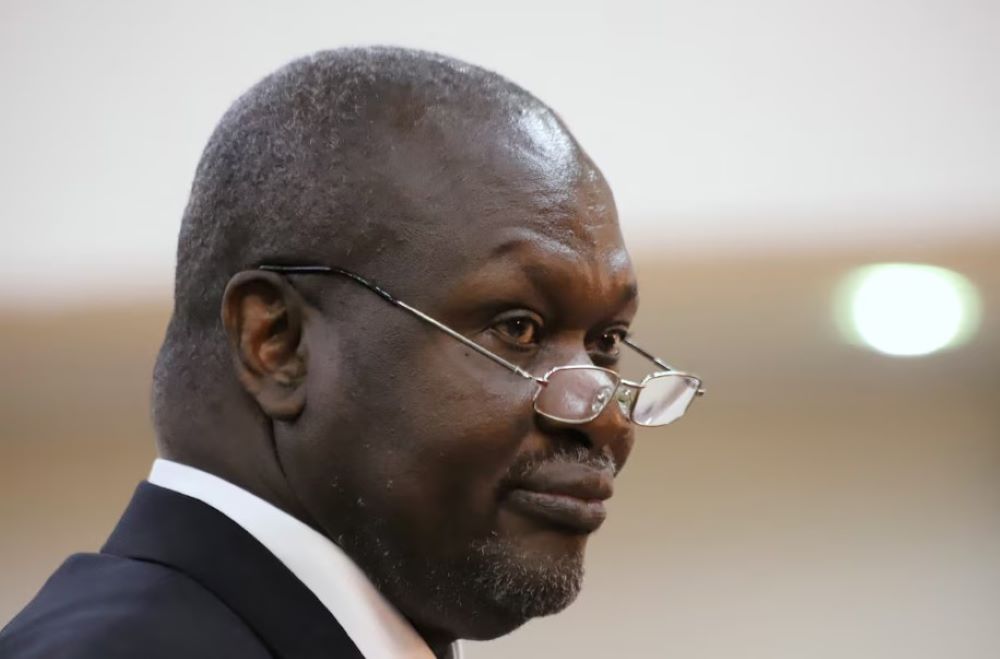
Machar, South Sudan’s First Vice-President, appeared before a special court in the capital, Juba, on September 22, 2025, facing charges including treason, murder, terrorism and crimes against humanity.
The prosecution followed an incident in early March 2025, when an armed group associated with the Nuer White Army overran a government military garrison in Nasir, Upper Nile State, killing soldiers. A United Nations aircraft was also fired upon during the aftermath, resulting in the death of a crew member.
The government subsequently placed Machar under house arrest on March 26, 2025. In September of the same year, the Ministry of Justice announced that investigations had been completed and that Machar and several other individuals would face prosecution.
However, Anyieth cautions that the circumstances surrounding the trial raise questions about judicial independence, political interference, fair-trial guarantees and the potential consequences for the country’s power-sharing arrangements.
The central concern is that a prosecution controlled by one side of a political conflict could be perceived as an instrument for eliminating political rivals rather than an impartial effort to establish accountability.
The author does not seek to determine Machar’s guilt or innocence. Instead, the study examines whether criminal proceedings conducted amid continuing political tensions can genuinely contribute to lasting peace.
A peace agreement yet to deliver justice
South Sudan’s current crisis is rooted in decades of conflict, including two Sudanese civil wars between 1955 and 1972 and from 1983 to 2005, before the country gained independence in July 2011.
The political breakdown between President Salva Kiir and Machar in December 2013 triggered another devastating conflict, characterised by widespread violence, displacement and human rights violations.
The 2018 Revitalised Agreement on the Resolution of the Conflict in South Sudan established a power-sharing arrangement and outlined three transitional justice mechanisms: The Commission for Truth, Reconciliation and Healing, the Hybrid Court for South Sudan and the Compensation and Reparation Authority. However, implementation has remained slow.
According to the study, the Commission for Truth, Reconciliation and Healing and the Compensation and Reparation Authority received enabling legislation in late 2024, while the Hybrid Court, which was intended to prosecute serious crimes with African Union involvement, had not been established at the time of publication.
The author identifies this implementation gap as a major weakness in South Sudan’s peace process, arguing that the country has not sufficiently addressed the institutional and security structures that have sustained recurring violence.
Three pillars for lasting peace
Anyieth proposes a repair-centred approach to justice built around three interconnected pillars: institutional reconstruction, relational repair and structural transformation.
Institutional reconstruction would require establishing an independent judicial system, operationalising the transitional justice mechanisms agreed upon in the peace agreement and strengthening the independence of courts and prosecution services.
Relational repair would focus on rebuilding trust among communities, restoring damaged family and social relationships and supporting reconciliation through community-based mechanisms.
However, the study cautions that traditional justice institutions must respect human rights, ensure women’s equal participation and avoid allowing reconciliation processes to replace criminal accountability for gender-based violence.
The third pillar, structural transformation, calls for security sector reform, the unification of armed forces, the demilitarisation of politics and reforms addressing land disputes and the management of oil revenues.
These measures, the author argues, are necessary to address the structural conditions that continue to generate political competition and violence.
Regional conflict adds pressure
The study also highlights the impact of the war in neighbouring Sudan, which erupted in April 2023 between the Sudanese Armed Forces and the Rapid Support Forces.
The conflict has increased humanitarian pressure on South Sudan through displacement and cross-border population movements. It has also disrupted oil-related economic activities, given South Sudan’s dependence on export pipelines running through Sudan.
According to Anyieth, these pressures have further weakened the country’s economic and political stability, making an already fragile peace settlement more difficult to sustain.
Drawing lessons from international and African experiences, including Rwanda’s Gacaca courts, the International Criminal Tribunal for Rwanda and the Special Court for Sierra Leone, the study concludes that criminal accountability is more effective when combined with truth-seeking, reparations and institutional reforms.
It emphasises that the objective should not be to abandon prosecution or postpone justice indefinitely, but to ensure that accountability operates alongside reforms capable of preventing further violence.
The study concludes that South Sudan needs a broader understanding of justice that goes beyond punishing individuals to rebuilding institutions, repairing communities and transforming the structures responsible for conflict.
Ultimately, it argues, lasting peace will depend on whether the country can turn its legal processes into instruments for building a shared future rather than allowing them to become another arena for political confrontation.