Rene Anthere Rwanyange
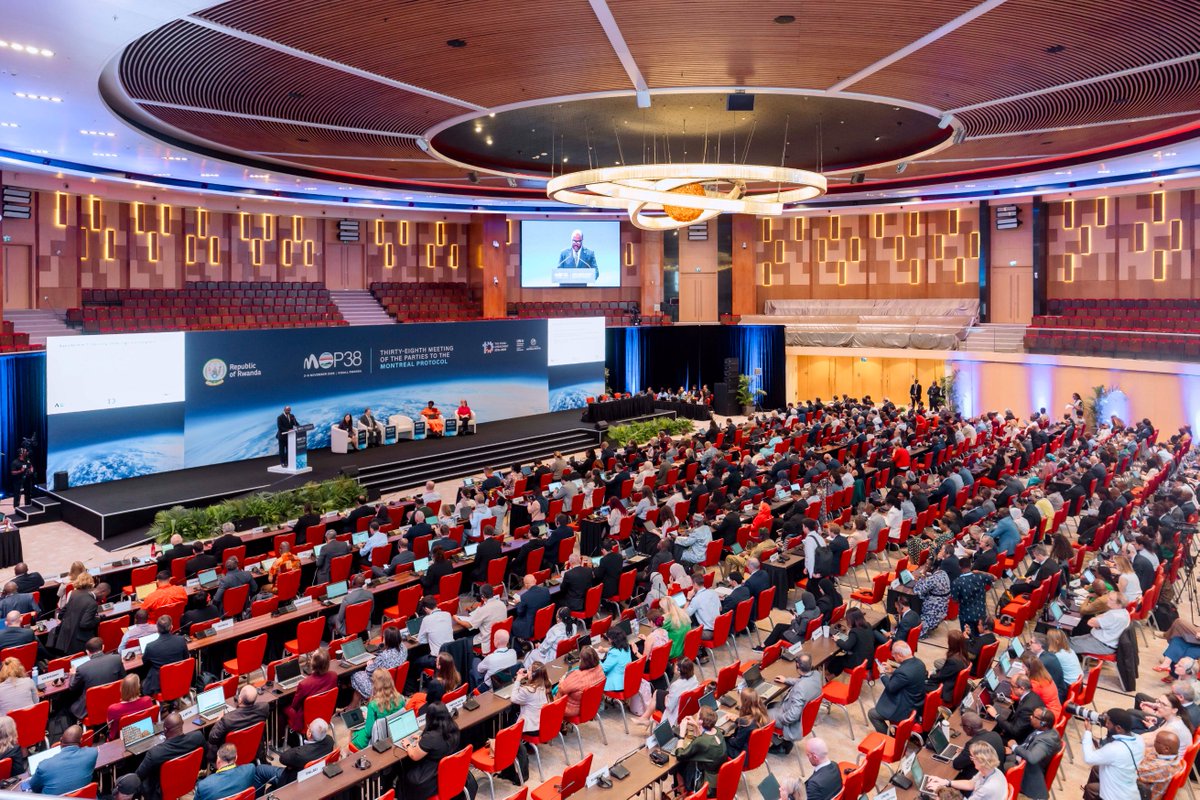
Rwanda’s Prime Minister Dr. Justin Nsengiyumva called on countries to sustain efforts to tackle climate change as Kigali hosts global negotiations on phasing down hydrofluorocarbons (HFCs), a decade after the adoption of the Kigali Amendment.
The call came during the high-level segment of the 38th Meeting of the Parties to the Montreal Protocol (MOP38), which brought government representatives and international partners to Rwanda’s capital from November 2 to 6, 2026.
The meeting is being chaired by Rwanda’s Minister of Environment, Dr Bernadette Arakwiye, and provides an opportunity for countries to assess progress in implementing the Kigali Amendment and strengthen cooperation on ozone protection and climate action.
Adopted in Kigali in October 2016, the amendment commits countries to gradually reduce the production and consumption of hydrofluorocarbons, gases widely used in refrigeration and air-conditioning systems. Although HFCs do not deplete the ozone layer, they are powerful greenhouse gases that contribute to global warming.
The amendment expanded the scope of the Montreal Protocol, the 1987 international agreement designed to protect the ozone layer by phasing out substances responsible for its depletion.
From global commitments to practical action
Addressing the meeting, Prime Minister Dr. Nsengiyumva urged nations to remain committed to tackling climate change and translating international agreements into practical measures.
The discussions come as demand for cooling continues to grow, particularly in developing countries where refrigeration and cold-chain systems support food preservation, healthcare and economic activity.
Reducing the climate impact of cooling therefore requires countries to promote alternatives to high-global-warming HFCs while improving the energy efficiency of refrigerators, air conditioners and other cooling equipment.
For Rwanda and other African countries, the transition also raises questions about access to affordable technologies, financing and technical skills needed to install, maintain and manage climate-friendly cooling systems.
The meeting offers countries an opportunity to review implementation challenges and identify areas where international cooperation, technology transfer and capacity-building can accelerate progress.
A decade after the Kigali Amendment
Rwanda’s hosting of MOP38 comes ten years after the country became the centre of global negotiations that resulted in the Kigali Amendment. The anniversary provides an opportunity to assess achievements since 2016 and consider what is needed to meet the commitments made under the agreement.
Full implementation of the amendment is expected to contribute significantly to limiting global warming, while continued implementation of the wider Montreal Protocol remains central to the recovery of the ozone layer.
As the meeting concludes, the focus is on ensuring that commitments made through international environmental agreements translate into measurable progress, particularly in countries that need financial and technical support to adopt cleaner cooling technologies.
For Rwanda, hosting the meeting places the country once again at the centre of international discussions on environmental protection, climate resilience and sustainable development.