Rene Anthere Rwanyange
KIGALI, Rwanda — Justice Kalihangabo Isabelle has urged future legal professionals to promote respect for international humanitarian law (IHL) and ensure the protection of medical facilities and healthcare workers during armed conflicts.
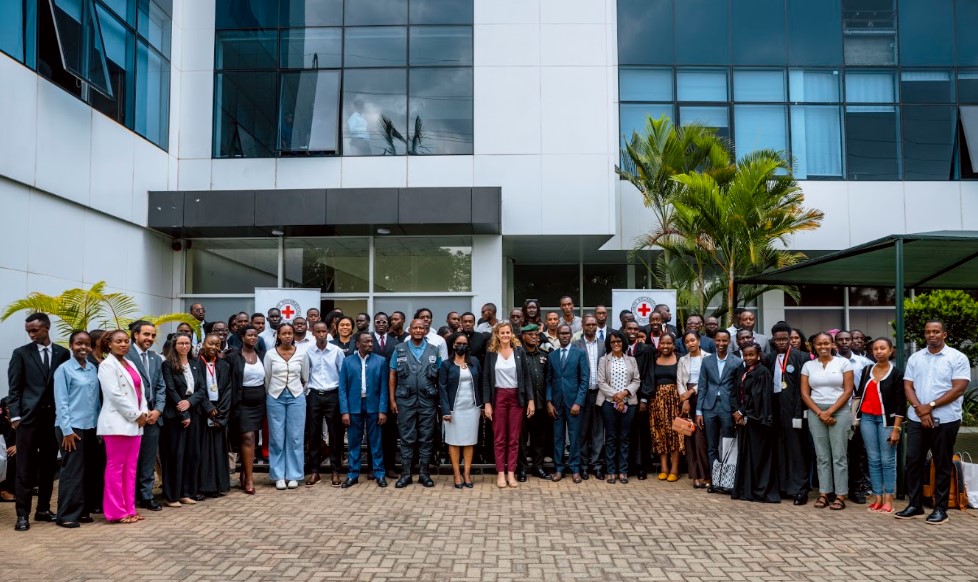
She made the call while officiating at the closing of the 10th Rwanda National IHL Moot Court Competition on October 16, 2026, emphasising that protecting medical services is a legal obligation essential to preserving human life and dignity during war.
The competition focused on “The Protection of Medical Facilities and Medical Personnel in Armed Conflicts,” highlighting the need to respect hospitals, medical units, ambulances and healthcare workers who provide essential care to people affected by conflict.
Justice Kalihangabo said the effective implementation of international humanitarian law depends not only on international instruments and national legislation but also on legal knowledge, professional responsibility and the commitment to translate legal obligations into practice.
She said moot court competitions equip young lawyers with the ability to analyse complex situations, present legal arguments and understand the practical application of international humanitarian law.
The speech stressed that failure to protect medical services can threaten healthcare workers, obstruct access to treatment and undermine the ability of entire communities to survive and recover.
Hospitals, ambulances and medical personnel must be respected and protected to ensure that people affected by armed conflict receive the care they need, she said.
“Respecting and protecting medical services is therefore not only about upholding the law, but also to ensure that, even amid the devastation of war, humanity prevails,” the speech stated.
Justice Kalihangabo encouraged participating students to apply the knowledge gained during the competition in their future legal careers, including promoting compliance with humanitarian law and holding those responsible for violations accountable.
She commended the International Committee of the Red Cross (ICRC), participating universities and other partners for supporting the initiative. Judges, academics, coaches and organisers were also recognised for their contributions.
The participants were congratulated for their efforts, while the winning team and other award recipients were commended for their achievements.
The 10th edition concluded with a call to strengthen collective efforts to develop, disseminate and implement international humanitarian law.
The competition provides a platform for preparing future legal professionals to understand that humanitarian law is not merely an academic subject but a body of rules designed to protect human life and dignity when they are most at risk.