Rene Anthere Rwanyange
From cleaner cooking stoves to solar power, Rwanda is turning emissions reductions into a new source of climate finance, with the potential to attract international investment, cut household costs and generate income for communities.
From Bugesera Disctrict, Ngeruka Sector, Gihembe Cell, Kagasa Village, Mr. Cypridion Habimana once began their mornings surrounded by smoke. Today, they begin them with the prospect of spending less on firewood.
For years, cooking meant balancing pots over three stones, burning bundles of wood and enduring smoke that filled his home. His children frequently coughed, while the family spent money on a basic necessity that offered little choice but to keep burning.
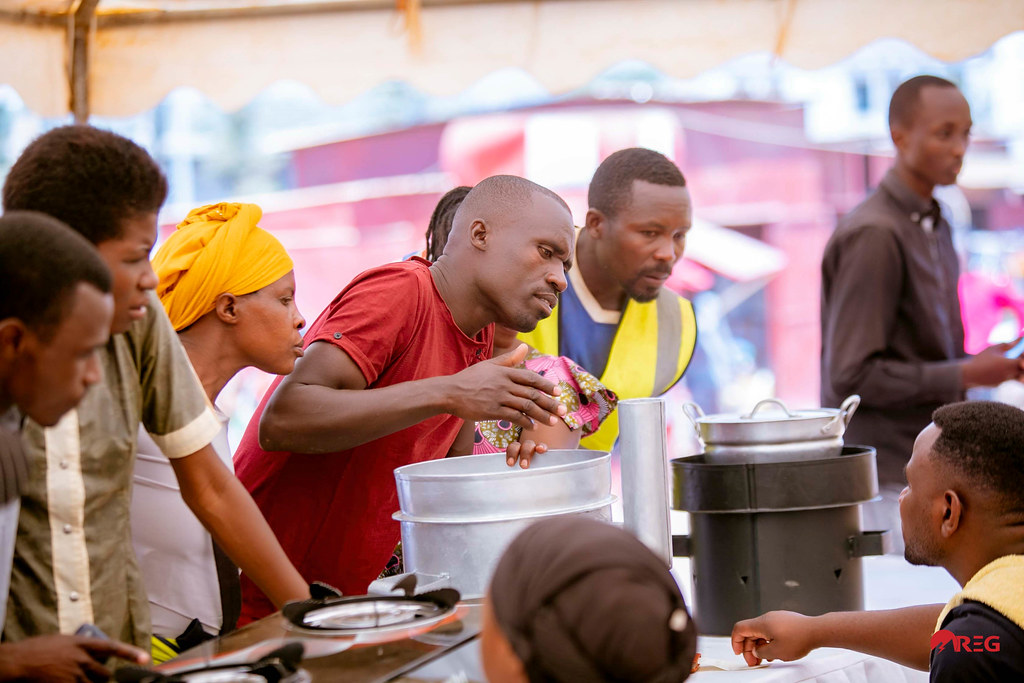
Then a field officer introduced him to a small metal stove called Tekera Aheza. “Use it. You pay less, three thousand Rwandan francs only,” he told him.
Mr. Habimana initially thought it was a handout. He had no idea that the stove connected his household to a growing international market in which reducing greenhouse gas emissions can generate money.
“The stove uses less firewood than a traditional cooking fire, helping reduce emissions while potentially improving household air quality and lowering fuel costs,” Habimana says.
When the resulting emissions reductions are properly measured and verified, they can generate carbon credits for sale to eligible buyers. A routine as ordinary as preparing a meal can therefore become part of a much larger economic equation.
For Rwanda, this is the promise of carbon markets: turning climate action into an investment opportunity while delivering tangible benefits to households.
Turning emissions reductions into revenue
Rwanda is developing the institutions and regulations needed to participate in international carbon markets, positioning itself to attract investment into projects that reduce greenhouse gas emissions.
The country has established a national carbon registry and a Designated National Authority to oversee carbon market activities. These mechanisms help register projects, track carbon credits and strengthen accountability as Rwanda pursues opportunities under Article 6 of the Paris Agreement.
Article 6 provides a framework for countries to cooperate in achieving their climate commitments, including through the international transfer of eligible emissions reductions under agreed rules.
Rwanda’s cooperation agreement with Singapore represents an important step in this direction. Such arrangements can create opportunities for projects in Rwanda to access international buyers, provided the credits meet the applicable requirements.
The opportunity is emerging as governments and businesses seek credible ways to meet climate targets. But the market is not simply about producing credits and finding buyers. Its long-term success depends on proving that emissions reductions are genuine, independently verified and not counted twice.
For Rwanda, credibility is an economic asset. The stronger the country’s systems for monitoring, reporting and verification, the better positioned its projects may be to compete for international climate finance.
Solar power and cleaner cooking lead the way
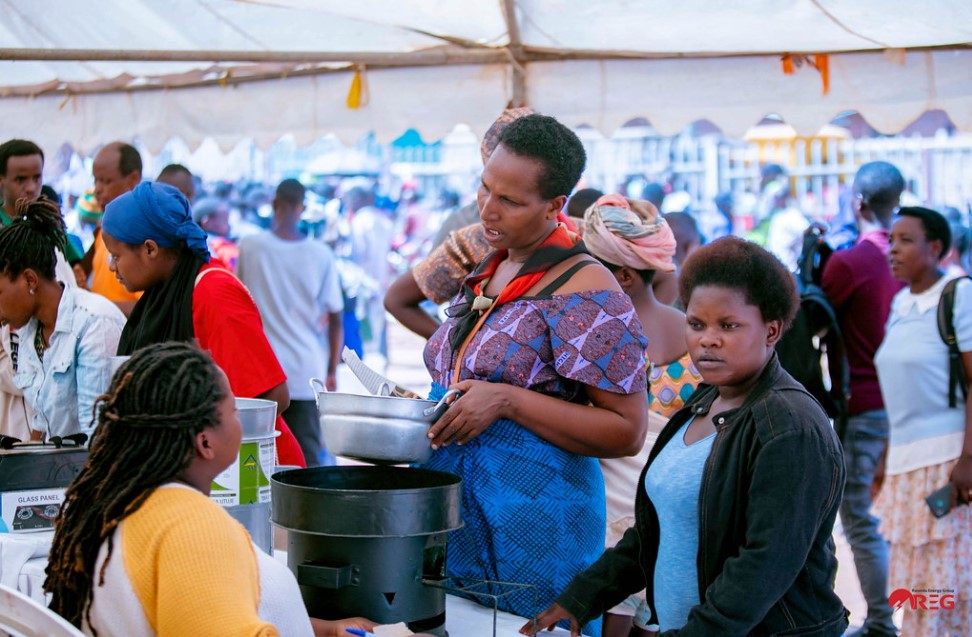
The Development Bank of Rwanda (BRD) and Rwanda Energy Group Ltd (REG) are helping translate this opportunity into projects on the ground.
Through its Cana Uhendukiwe initiative, the bank has supported the deployment of solar energy systems to 510,847 households, with an investment of $48.94 million, according to reported project figures.
Expanding access to solar energy can reduce dependence on more carbon-intensive energy sources while improving access to electricity. It also demonstrates how climate finance can support development priorities rather than treating emissions reductions as an isolated environmental objective.
BRD’s Tekera Aheza initiative focuses on improved cookstoves, which reduce the amount of firewood required for cooking. For participating households, the potential gains include lower fuel expenditure, less time spent collecting firewood and reduced exposure to smoke.
For the carbon market, the calculation is different but connected. Reduced fuel consumption can translate into lower emissions, creating the possibility of generating credits that are sold to eligible buyers.
Together, the two initiatives are expected to deliver substantial greenhouse gas reductions, with reported projections exceeding 600,000 tonnes of emissions.
BRD has reported receiving an initial $214,000 in carbon revenue. Earlier projections anticipated approximately $2 million by December 2025 and $16 million in 2026, although the amounts actually received need to be confirmed against the bank’s latest disclosures.
The distinction between projected and realised revenue is important. Carbon projects require investment upfront, while credit issuance, verification and sales can take time. Their financial performance depends on the volume of eligible credits generated, market prices and the terms of individual transactions.
Nevertheless, the model offers Rwanda a potential way to attract additional funding for clean energy and climate-related development.
Why international buyers are interested.
Demand for credible carbon credits is being shaped by companies seeking to address their emissions and by international mechanisms governing their use.
Aviation is one important market. The Carbon Offsetting and Reduction Scheme for International Aviation (CORSIA), administered by the International Civil Aviation Organization, allows participating airlines to use eligible emissions units to meet applicable offsetting requirements.
However, not every carbon credit qualifies for this market. Credits must satisfy the relevant eligibility criteria, including requirements concerning environmental integrity and emissions accounting.
A reported transaction involving 200,000 Rwandan cookstove credits by Base Carbon illustrates the commercial potential of projects that can meet demanding market standards. The transaction’s precise price, eligibility and financial terms should be confirmed through the company’s disclosures and relevant programme documentation.
The broader lesson is that carbon credits are not interchangeable commodities. Their value depends on the quality of the underlying project, the reliability of emissions calculations, verification procedures and the confidence buyers have in the claims being made.
For Rwanda, this creates both an opportunity and a responsibility: to develop projects that can command market confidence while protecting the country’s environmental interests.
Making sure communities share the benefits
For households such as Mr. Habimana, the most immediate measure of success is not the price of a carbon credit in an international market. It is the difference the project makes to daily life.
If his reported monthly firewood savings of Rwf30,000 are sustained, he would retain Rwf360,000 a year for other household needs. Such savings could help families manage expenses while reducing pressure on wood resources.
But household savings alone do not establish how much carbon revenue reaches communities. That requires transparent benefit-sharing arrangements, clear reporting and effective oversight.
Rwanda’s framework includes provisions for community benefits in specified circumstances, including certain carbon projects involving community land. The frequently cited 30% requirement should be applied according to the relevant legal provisions and project circumstances, rather than assumed to cover every carbon project.
The principle is crucial. Communities that contribute to emissions reductions should understand how projects operate, what benefits they can expect and how those benefits will be distributed.
Carbon finance can support local development, but only if commitments are honoured and communities have a meaningful role in decisions affecting them.
Independent verification and transparent financial reporting can help ensure that projects deliver the social and environmental outcomes used to justify their credits.
Kigali’s chance to shape Africa’s carbon market.
The Carbon Markets Africa Summit in Kigali provides an opportunity to bring investors, project developers, policymakers and climate experts together around a market that could mobilise new financing for Africa’s development.
For Rwanda, the ambition extends beyond selling credits. Carbon finance could support renewable energy, cleaner cooking, forest conservation and other initiatives that contribute to national climate objectives.
Yet the market carries risks. Carbon prices fluctuate, project development can be costly, international rules evolve, and weak accounting can undermine the credibility of emissions reductions. Carbon revenue should therefore complement broader climate investment, not become a substitute for it.
Rwanda’s advantage will depend on the quality of its projects, the strength of its regulatory framework and its ability to demonstrate that the benefits of carbon finance extend beyond financial transactions.
The country may not have the vast oil and gas reserves that underpin some export economies. But it has an opportunity to build value from investments that reduce emissions while improving people’s lives.
From Bugesera District, that opportunity begins with a stove that burns less firewood. The household saves money, the project may generate verified carbon credits, and an international buyer gains access to an eligible emissions reduction.
The journey from a cooking fire to a carbon market is complex, involving measurement, verification, regulation and international trade.
But the underlying proposition is straightforward: climate action can become an economic asset when emissions reductions are credible and the people who make them possible share in the benefits.
That is Rwanda’s invisible harvest, and its real value will be measured not only in carbon credits sold, but also in money saved, livelihoods improved and emissions genuinely avoided.