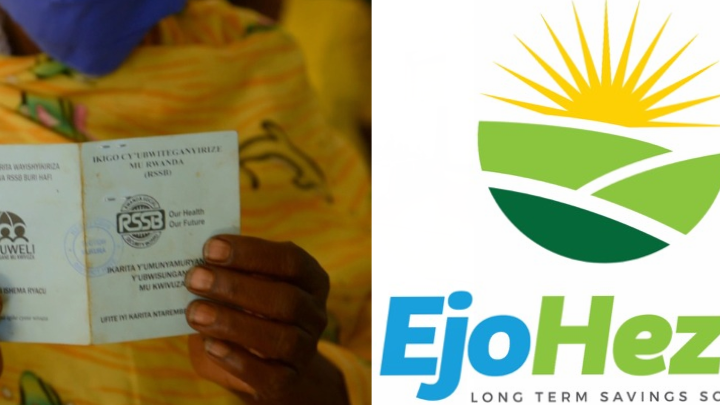
The Rwanda Social Security Board (RSSB) has recognized districts in the Southern Province for their efforts to encourage residents to save through the EjoHeza long-term savings scheme and enroll in the Community-Based Health Insurance program, commonly known as Mutuelle de Santé. Nyamagabe was praised for collecting more savings than its target, while Gisagara stood out for the high participation of workers in the informal sector.
The recognition took place on October 28, 2026, when RSSB awarded the best-performing districts and called on local authorities to continue mobilizing residents to save for their future and access health insurance.
During the 2025–2026 financial year, the Southern Province recorded 90 per cent participation in Mutuelle de Santé, above the national rate of 88.6 per cent. However, provisional figures as of October 26, 2026, showed that participation had dropped to 83.4 per cent in the province, compared with 76.5 per cent nationally.
Kamonyi District ranked second nationally, with 96.8 per cent participation during the 2025–2026 financial year. Nyaruguru recorded 91.6 per cent, Muhanga 91.3 per cent, and Gisagara 90.5 per cent. In the 2026–2027 financial year, provisional figures showed Gisagara at 89 per cent, Nyaruguru at 87.1 per cent, Muhanga at 86.7 per cent, and Kamonyi at 77.4 per cent.
Kamonyi District Mayor Niyongira Sylivère said changes introduced in the health insurance program had created challenges in reaching the expected participation rate. He said district officials were continuing to explain the changes to residents so they could better understand how the program works.
“The recent changes in the community health insurance program have made it more difficult for us to reach our target. We are continuing to meet residents and explain the new arrangements so they can understand the program and take part in it.”
Southern Province Governor Kayitesi Alice said local authorities were working to improve performance and encourage more people to join both savings and health insurance programs.
“We are making every effort to improve the performance of our districts and increase the number of residents taking part in these programs. People need to understand that saving for the future and contributing to health insurance are important responsibilities.” She said
In EjoHeza savings, Nyamagabe District exceeded its target by a significant margin. According to RSSB, the district had aimed to collect Rwf369.1 million but raised Rwf463.8 million, equivalent to about 126 per cent of its target.
The district’s total savings increased by 45 per cent in the 2025–2026 financial year. In addition, 20,738 residents had contributed to EjoHeza at least ten times since joining the scheme. They represented 16 per cent of registered members in Nyamagabe, compared with the national rate of 15 per cent.
The district mayor said EjoHeza was an important way for residents to prepare financially for the future and improve their livelihoods. The mayor added that continued cooperation between local leaders and the community was necessary to expand participation.
He said: “We see EjoHeza as an important program that helps residents save for their future and improve their lives. Working together with the community will help us reach more people and make the program more successful.”
Gisagara District also recorded strong participation among workers in the informal sector. RSSB reported that 116,112 people in this category were saving through EjoHeza, representing 90 per cent of the district’s savers. Nationally, informal-sector workers account for 76 per cent of people saving through the scheme.
Their savings in Gisagara had reached Rwf1.576 billion, representing 81 per cent of all savings collected in the district. During the 2025–2026 financial year, Gisagara collected Rwf383.5 million through EjoHeza, an increase of 22 per cent compared with the previous financial year.
RSSB Deputy Director General in charge of Investment, Michelle Umurungi, congratulated the districts that had made progress in EjoHeza and Mutuelle de Santé. She encouraged other districts to learn from those performing well.
She said that: “We appreciate the districts that have made progress in encouraging residents to save and join health insurance. We urge them to continue their efforts, while districts that are still behind should learn from successful approaches used by others.”
RSSB has called for continued public awareness campaigns, particularly targeting people who have never saved through Ejo Heza and those who previously contributed but later stopped. The institution also emphasizes the importance of helping residents choose savings options that match their financial abilities and understand the benefits of preparing for the future.
Despite the progress made in the Southern Province, access to community health insurance remains a challenge for some residents. RSSB figures show that 501,461 people had not yet become members who met the requirements for accessing health services through Mutuelle de Santé. Another 157,611 had paid part of their contributions but had not completed the required payments.
The figures show that, although some districts have made progress in savings and health insurance participation, more work is needed to reach residents who are still outside these programs. RSSB says cooperation between local authorities and communities will remain important in increasing savings and helping more people meet the requirements for health insurance coverage.