By Rene Anthere Rwanyange
Rwanda is seeking to strengthen its potato industry by linking biotechnology research with private seed businesses, in a move aimed at reducing production risks, improving farmers’ returns and expanding access to quality planting materials.
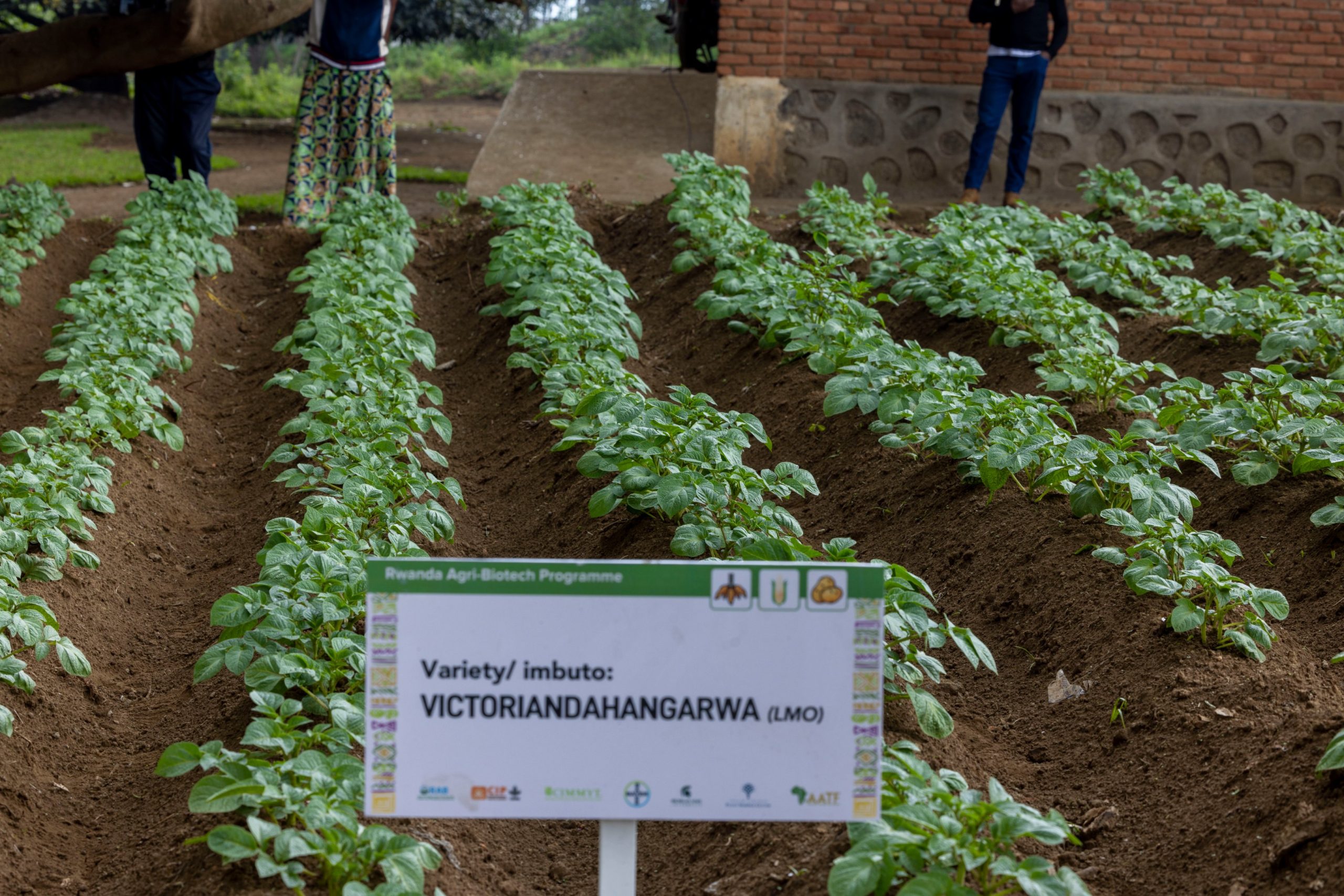
The Rwanda Agriculture and Animal Resources Development Board (RAB), the International Potato Center (CIP) and ten selected seed companies are working on a roadmap to multiply and distribute late blight-resistant (LBR) biotechnology potato seed.
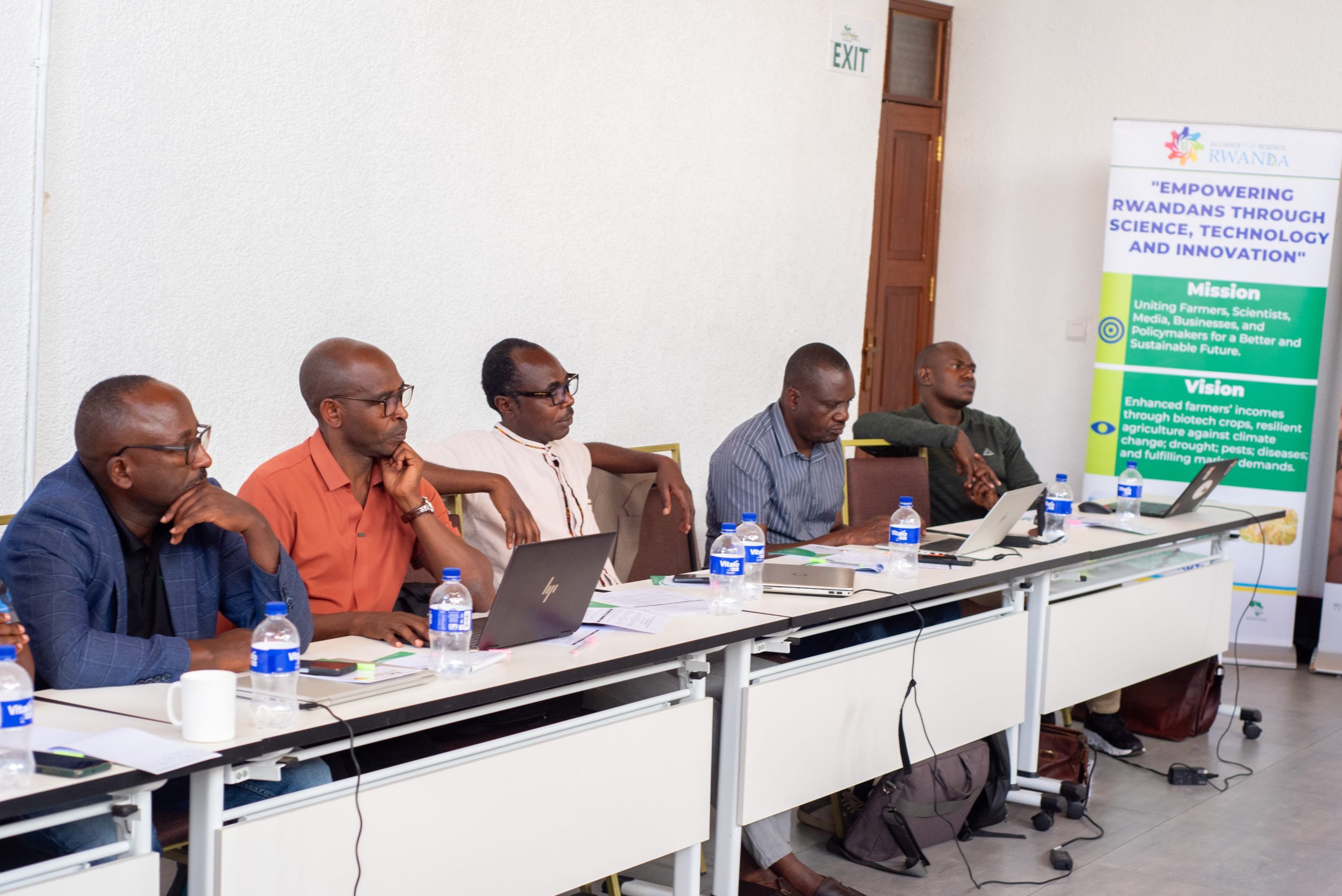
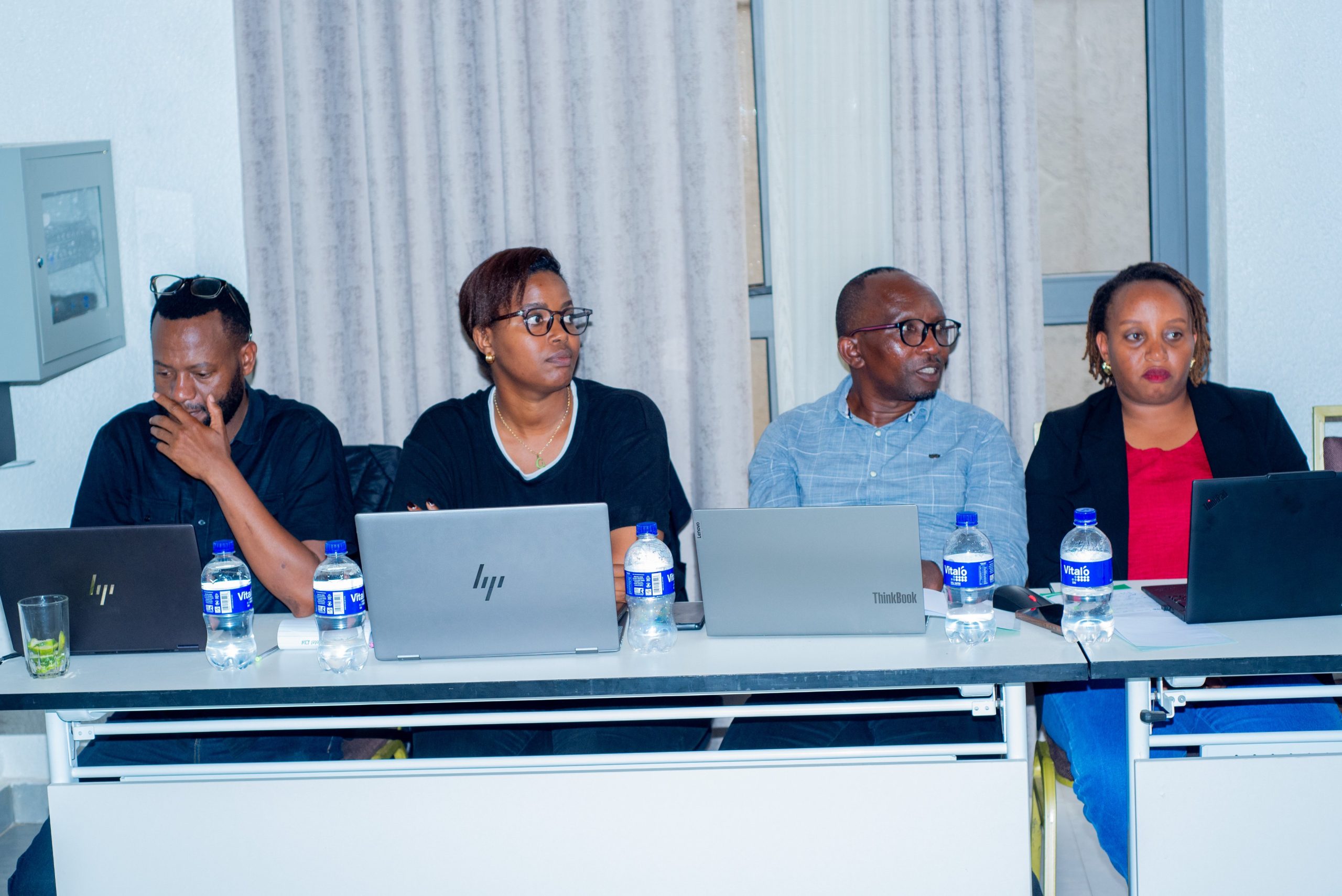
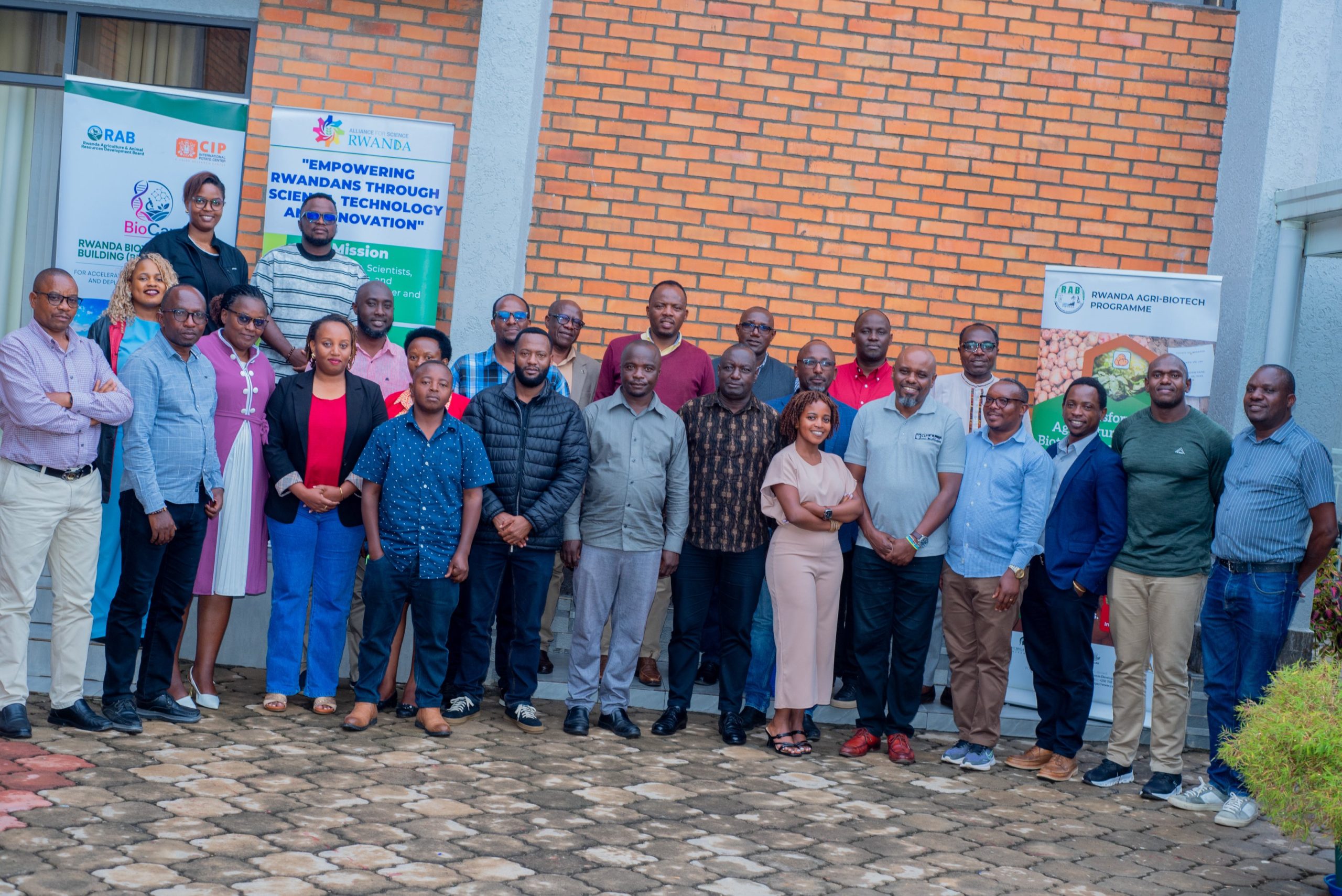
The partners met in Musanze District on November 17–18, 2026, for a two-day workshop organised under the RABP-CMP Project. The meeting focused on building a coordinated system that connects agricultural research, seed multiplication and commercial distribution.
Potato is an important food and cash crop in Rwanda. It supports household food security, rural employment and incomes. It also contributes to economic activity across the agricultural value chain, from seed production and farming to transport and marketing.
However, late blight remains a major production constraint. The disease can cause substantial crop losses and force farmers to spend more on fungicides. These costs can reduce profit margins and make potato farming less attractive, particularly for small-scale producers.
The development of late blight-resistant biotechnology varieties could help reduce these pressures. By limiting losses caused by the disease, the varieties could lower crop protection costs, improve productivity and make farmers’ investments in potato production more productive.
The economic benefits will depend on farmers gaining access to reliable and affordable seed. This requires an effective multiplication and distribution system, supported by quality assurance, regulatory oversight and strong market links.
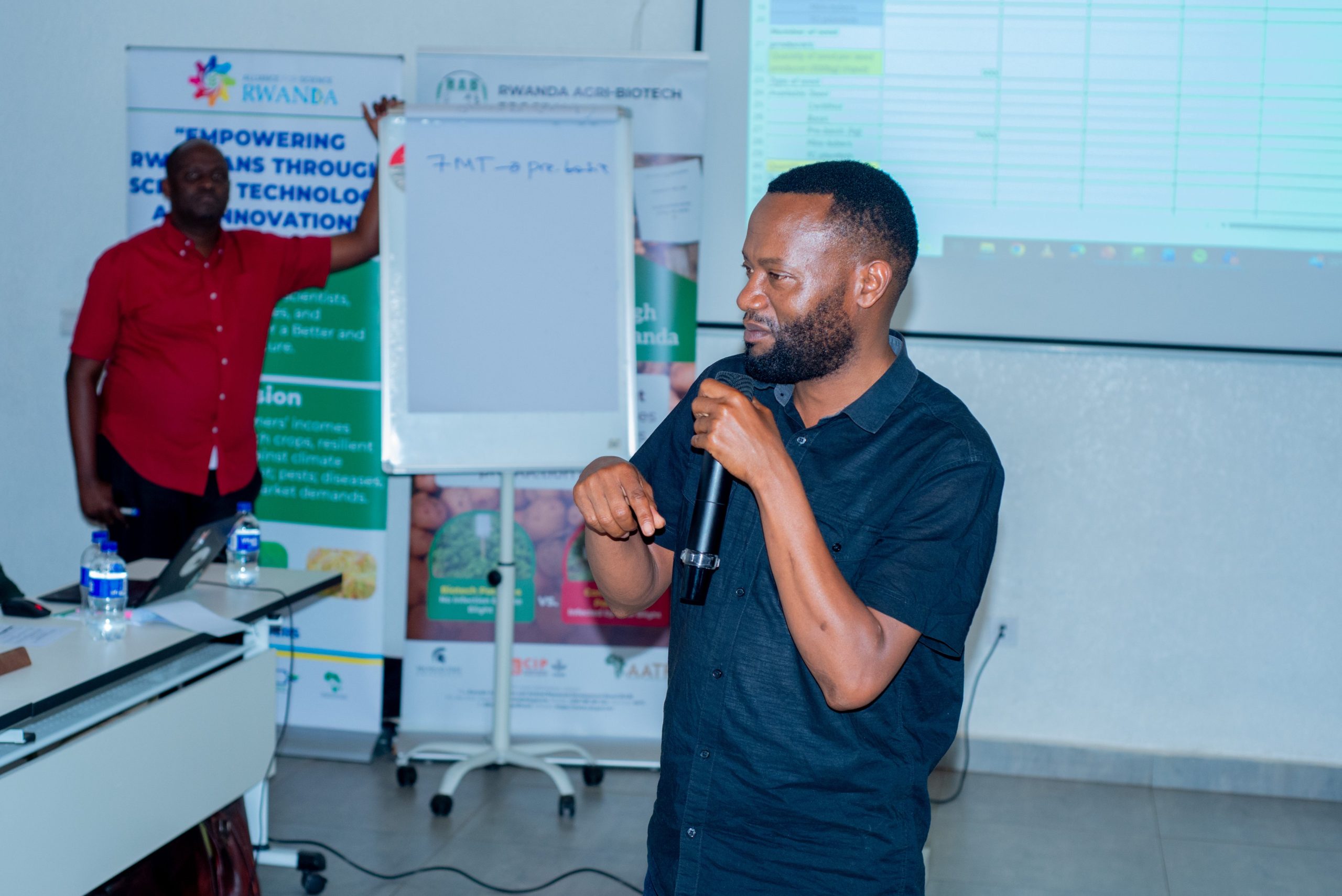
Dr Athanase Nduwumuremyi, Head of RAB’s Roots and Tubers Programme, urges seed multipliers to adhere to quality standards and produce sufficient quantities of seeds to meet market demand. He also calls on them to reassure farmers that the new potato seed variety is no different from other varieties, except that it offers the added advantage of withstanding the effects of climate change.
“We urge seed multipliers to strengthen their efforts to comply with quality standards in their seed production activities. We also call on them to reassure farmers that the new potato seed variety is an ordinary variety, with the added advantage of resistance to climate change and crop pests. This variety is expected to deliver higher yields compared with conventional varieties,” Dr Nduwumuremyi said.
The ten selected seed companies are expected to play a central role. Their participation creates an opportunity to strengthen private-sector involvement in seed production and expand the supply of improved planting materials across Rwanda’s major potato-growing areas.
For seed businesses, the initiative could open opportunities to develop their production capacity and serve a wider market. For farmers, a stronger seed supply system could improve access to quality planting materials and reduce the risks associated with unreliable seed.
Pacifique Nshimiyimana, AfS-Rwanda Country Director, said the roadmap is designed to strengthen the capacity of local seed multipliers while ensuring compliance with Rwanda’s agricultural policies.
“This biotech potato seed roadmap is being designed with the intention to build the capacity of our local seed multipliers in compliance with Rwanda’s agriculture policies,” he said.
He explained that the initiative had moved from product development to Farmer Participatory Trials, which allow researchers to assess seed performance under normal production conditions and collect feedback from farmers.
“After a long period spent on product development, RAB, CIP and other partners under the Rwanda AgriBiotech Program – Cassava, Maize & Potato (RABP-CMP) have reached a stage of Farmer Participatory Trials, a mechanism used to collect final perspective and appraisal data on seed performance under the normal production system,” Nshimiyimana continued.
He added that the ten selected potato seed companies and model farmers were being engaged to support researchers in the final stages of seed deployment and commercialisation.
“This is a very great time to help us disseminate these good stories of how we are building an inclusive and business-oriented biotech potato seed deployment to the farmers of Rwanda,” he added.
Communication is also part of the process. Farmers, seed producers, researchers, policymakers and extension workers need clear, evidence-based information about the technology, its intended benefits, management requirements and regulatory safeguards.
The workshop seeks to promote informed engagement and ensure that farmers’ experiences and production needs shape decisions on the technology. Their participation will be important in assessing whether the innovation responds to the realities of potato production.
The partnership between RAB and CIP, together with private seed companies, reflects an effort to turn scientific research into economic opportunities across the potato value chain.
A stronger seed system could support more reliable production, improve farm incomes and create business opportunities for companies involved in seed multiplication and distribution. It could also contribute to a more competitive potato sector and strengthen the country’s food supply.
The initiative’s success will depend on translating the roadmap into practical action, ensuring regulatory compliance and making quality seed accessible to farmers at affordable prices.
Ultimately, the value of biotechnology will be measured not only by scientific progress, but by its ability to reduce production costs, improve farmers’ returns and strengthen Rwanda’s agricultural economy.