By Rene Anthere Rwanyange
KIGALI, September 1, 2026 — Africa must move beyond generating agricultural knowledge and technologies to ensuring that innovations reach farmers, generate income, strengthen climate resilience and deliver measurable impact, experts said Tuesday at the Rwanda Pavilion during the Africa Food Systems Forum (AFSF) 2026 in Kigali.
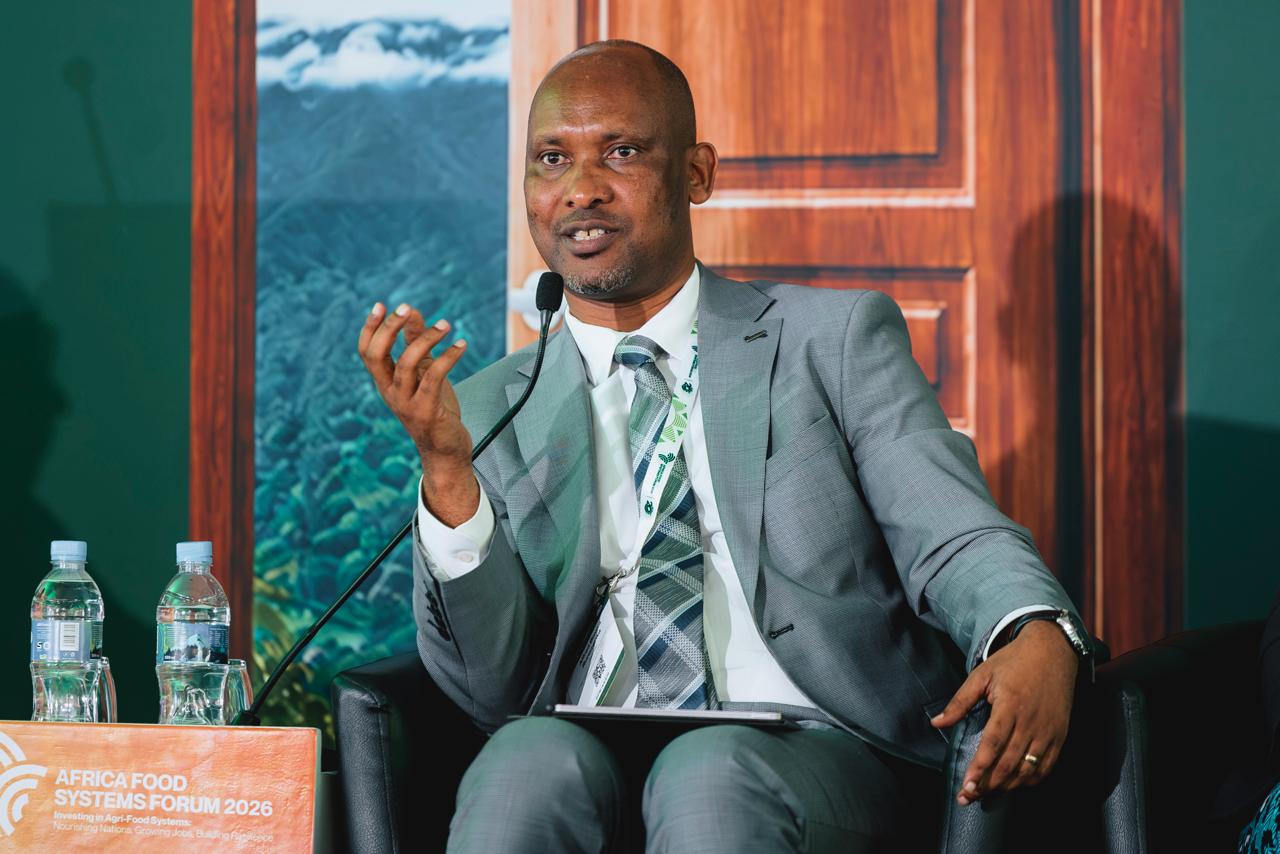
The call was made during a session titled “From Research to Impact: Smart Innovation for Sustainable Agri-Food Systems,” which brought together researchers, academia, government, technology companies and investors to examine how agricultural innovations can move from laboratories and pilot projects to farms, markets and households.
Opening the session, Dr. Florence Uwamahoro, Acting Director General of the Rwanda Agriculture and Animal Resources Development Board (RAB), says that Africa’s challenge is no longer simply producing knowledge, but ensuring that knowledge is translated into solutions that respond to farmers’ needs.
“The science is the foundation, innovation is the bridge, but scaling is what creates an impact,” Uwamahoro says.

She calls for research and innovation systems to focus increasingly on results that matter to farmers, including productivity, incomes, climate resilience, nutrition and food security.
“We should increasingly ask: how many farmers are using the innovations, and what difference is it making to productivity and incomes?” she adds.
Her remarks set the tone for a panel discussion on what makes an agricultural innovation ready for wider adoption and investment.
Prof. Alfred Bizoza, an agricultural researcher and university lecturer, says that innovations must first demonstrate that they work, while also providing clear economic incentives for farmers.
“Does the technology have an incentive behind it that will attract the farmers to adopt?” Bizoza asks, emphasizing profitability as a key driver of adoption.
He also warned that technologies cannot be separated from farmers’ livelihood systems. “The more you take it out of the livelihood framework of the farmers, then it is not going to work,” he said.
Bizoza cited climate-resilient seed varieties and irrigation as technologies with strong potential to help farmers adapt to climate change, but noted that high investment costs and challenges around maintenance continue to limit their scale.
Dr. Magnifique Ndambe Nzaramba, Deputy Vice Chancellor at the Rwanda Institute for Conservation Agriculture (RICA), says that universities have a critical role in making research more practical and responsive to agricultural realities.
“We need to start having curricula that are problem-driven, so that we teach science in ways that would be easier for graduates to apply,” he adds.
He urges researchers to adopt a systems approach that considers the entire agricultural value chain rather than concentrating narrowly on technologies that are primarily designed for academic publication.
“We tend to take kind of a technology approach instead of a systems approach,” Ndambe Nzaramba says.
Eric Muziga Rutayisire, representing Charis, a technology company using drones and digital solutions for agricultural services, expresses that private-sector innovators must demonstrate tangible value to farmers.
“The value explained in a very simple-to-understand manner wins all the time,” Rutayisire says.
He cites Charis’s drone-based spraying services, explaining that the technology can significantly reduce water use while improving efficiency on large farms.
“We come to a farmer, we show them how they are using, for example, 300 litres of water per hectare to spray. But we are cutting it by 10, and we just need to use 20 litres,” he adds.
From the investment perspective, Marie Ena Dorenencour, Senior Officer at the CGI House for Sustainable Finance, says that innovations seeking financing must demonstrate commercial viability and a credible pathway to scale.
“There needs to be a minimum viable product that can be explained, that can be commercialized,” she says.
She added that innovators must demonstrate how they will move from serving a small number of farmers to reaching thousands or millions. “The scaling pathway needs to be identified and tested,” Dorenencour adds.
The discussion reflects the broader agenda of AFSF 2026, which is focused on investing in Africa’s agri-food systems to nourish nations, create jobs and build resilience.
It also comes as AGRA marks 20 years, providing an opportunity to reflect on two decades of efforts to strengthen agricultural systems and accelerate innovation and investment across Africa.
The panelists agreed that the next phase of agricultural transformation will require research that responds to real problems, technologies that farmers can afford, businesses that can scale proven solutions, and financing models that support innovation beyond the pilot stage.