Our writer
Results of two national youth nuclear dialogues held in Rwanda were presented in Antalya, where Rosatom backed regional youth nuclear platforms for Africa.
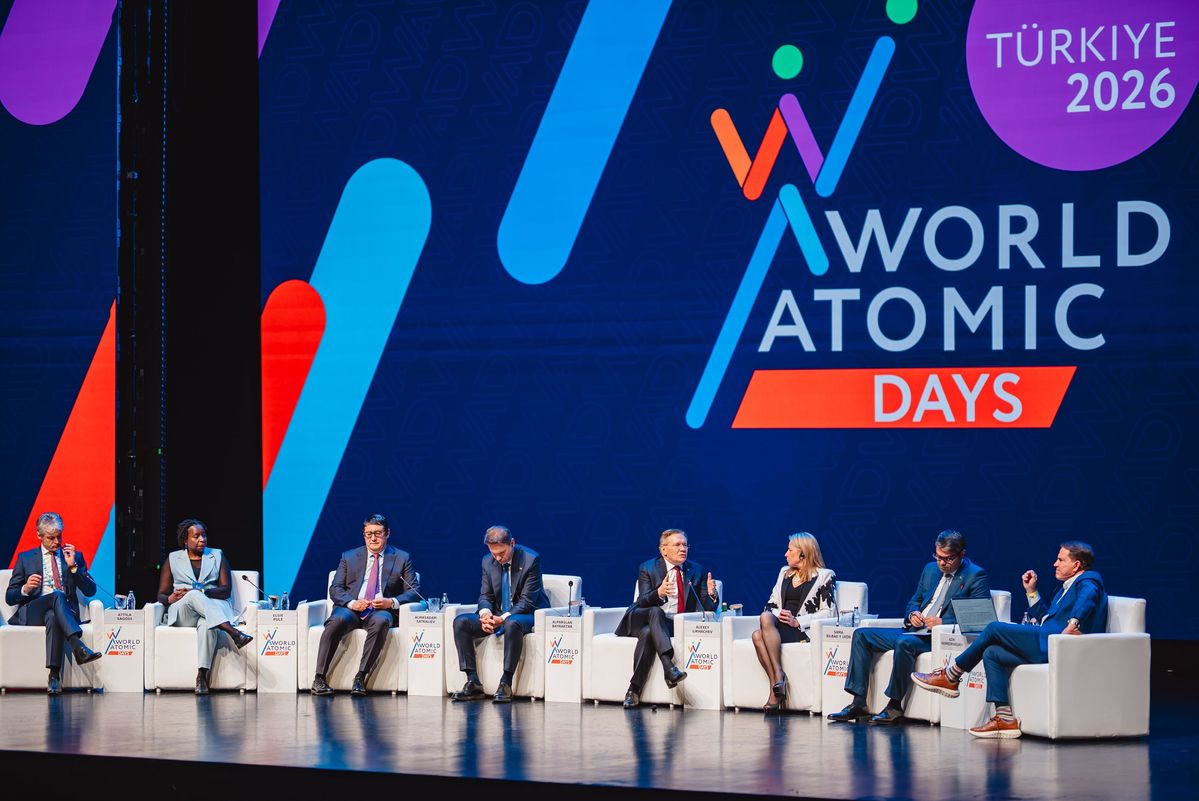
Rwanda is represented on the Impact Team 2050 Council, Rosatom’s global youth partnership, by Founder of Greenrev Gr Joseph Niyomukiza. On 12 November, the Council met Rosatom Director General Alexey Likhachev in Antalya, Turkey. The meeting took place at World Atomic Days 2026, Rosatom’s international business forum. Members brought him the results of national youth nuclear dialogues. Two of them were held in Rwanda.
Council members proposed forming national Impact Team 2050 teams and regional youth nuclear platforms. Alexey Likhachev supported the idea. “I am confident that such work should also begin in other regions of the world that you represent: Latin America, Africa, Europe and the Asia-Pacific region,” he highlighted.
In total, 17 dialogues took place in 15 countries. They brought together more than 15,000 young people. Participants met heads of nuclear and energy agencies and companies. They also surveyed students, schoolchildren and young professionals about barriers to nuclear careers. Joseph Niyomukiza was listed among the speakers of the forum’s Young Leaders Panel on the dialogue results.
Young Rwandans are already building the country’s nuclear sector. In August 2025, the Rwanda Atomic Energy Board (RAEB) celebrated the first cohort of 16 graduates of Russian universities. They completed its Young Professionals Programme with internships at the Rwanda Cancer Center and the Rwanda Utilities Regulatory Authority, among other institutions.
They studied under the memorandum on nuclear education and training between Rwanda and Rosatom. The two countries also run a joint working group on personnel training.
Rwandan specialists also take part in international youth nuclear initiatives. In September 2025, Head of the Nuclear Safety and Security Department at RAEB Agnes Mutoni presented the draft of the first Youth Declaration on Atomic Cooperation at World Atomic Week in Moscow. The document was prepared by 100 young leaders from 33 countries.
Joseph Niyomukiza’s own work links youth engagement with food security. In November 2025, he represented the World Food Forum – Rwanda Chapter at the first joint discussion between RAEB and the Food and Agriculture Organization of the United Nations (FAO). The meeting focused on applying nuclear science to agriculture.
On 28 October 2026, Rosatom and RAEB signed a memorandum on the assessment and development of Rwanda’s nuclear infrastructure. “Our cooperation with Rwanda is comprehensive: we are working together on projects for a small nuclear power plant and a Centre for Nuclear Science and Technology, while also training the country’s future nuclear professionals,” stressed Alexey Likhachev.
Regional cooperation is a priority for Rwanda. “No African country should walk this path alone,” stressed Chairman of RAEB Lassina Zerbo at the Third Russia–Africa Summit. The same theme ran through the forum’s second day. On 13 November, the Annual Conference of the BRICS Nuclear Energy Platform reviewed research on financing nuclear projects and on resilient supply chains.
World Atomic Days 2026, held in Antalya on 12–13 November, is Rosatom’s international business event complementing the COP31 climate agenda. It is one of the global nuclear industry’s key events in 2026. Rosatom organises it for international partners to promote nuclear technologies. The event is held with the support of the IAEA, the World Nuclear Association and the BRICS Nuclear Energy Platform.
The 31st Conference of the Parties to the UN Framework Convention on Climate Change (COP31) is taking place in Antalya, Turkey, from 9 to 20 November 2026. It brings together governments, international organisations, business, the scientific community and civil society initiatives to discuss how to combat climate change and develop a low-carbon economy.
Impact Team 2050 is Rosatom’s global youth partnership. Rosatom Director General Alexey Likhachev launched it in December 2021 at the Global Impact Conference. Its mission is to strengthen Rosatom’s partnership with young leaders abroad and to involve young people in nuclear science and technology.
Selection for the Council’s second composition was completed in May 2026. Out of 207 semi-finalists from 58 countries, 13 young leaders from 13 countries joined the Council. Five of them are from Africa – Egypt, Tanzania, Rwanda, Ethiopia and South Africa. Four members of the first composition continue as mentors. From August to November 2026, Council members and mentors held 17 national youth nuclear dialogues.