By Rene Anthere Rwanyange
South Sudanese traditional, religious, youth and civil society leaders are stepping up calls for reconciliation and national unity ahead of the December 2026 general elections. They are pledging to tackle tribalism, political divisions and mistrust through community dialogue and a joint peacebuilding action plan.
The commitment comes as the country prepares for the polls, with leaders warning that divisions among communities threaten peaceful coexistence and calling for stronger cooperation to prevent conflict.
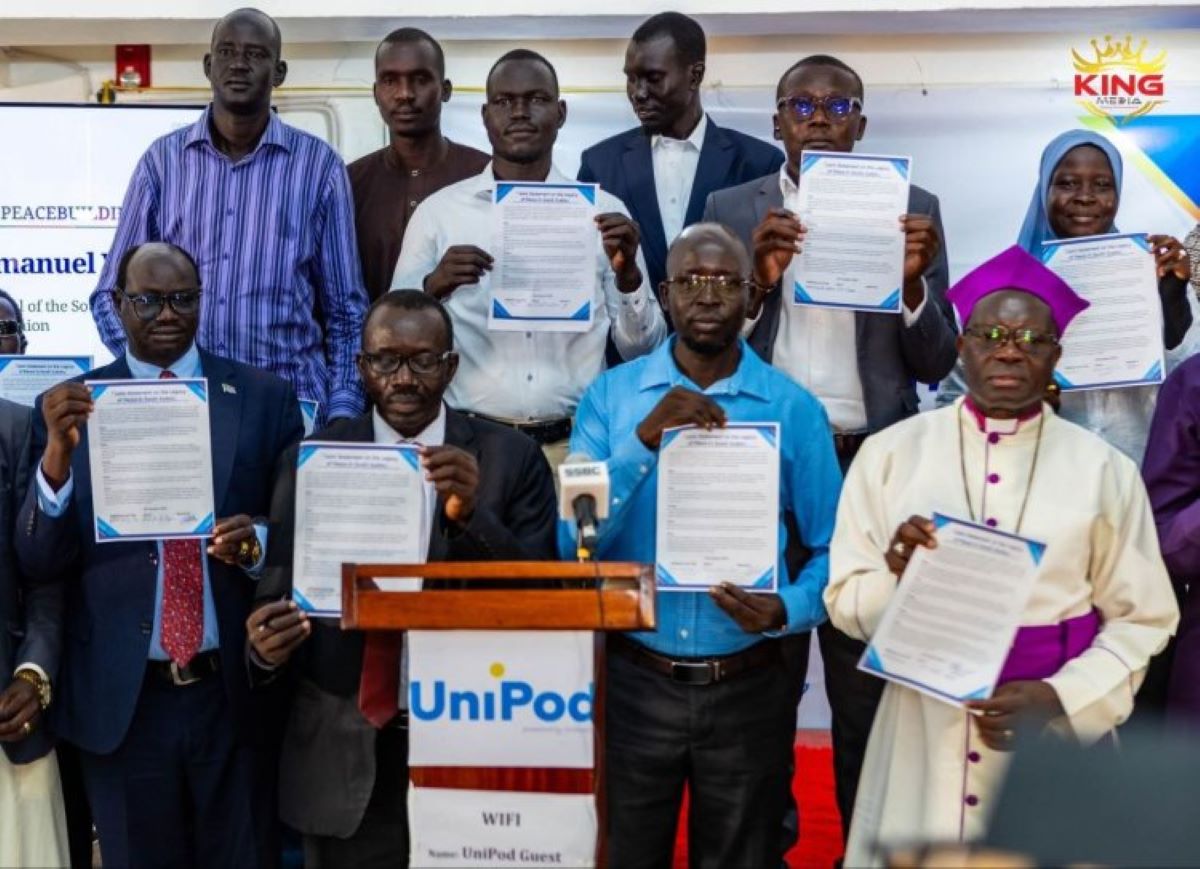
The pledge emerges from the “One South Sudan Peace Conference: Beyond Our Camps, Bridging Our Future,” held at the University of Juba, where participants adopt a joint statement outlining practical measures to strengthen dialogue, resolve disputes and promote national unity.
The conference is jointly organised by the National Council of Traditional Authority Leaders (NCOTAL), the Community Empowerment for Progress Organization (CEPO), the Center for Inclusive Governance, Peace and Justice (CIGPJ), and HWPL.
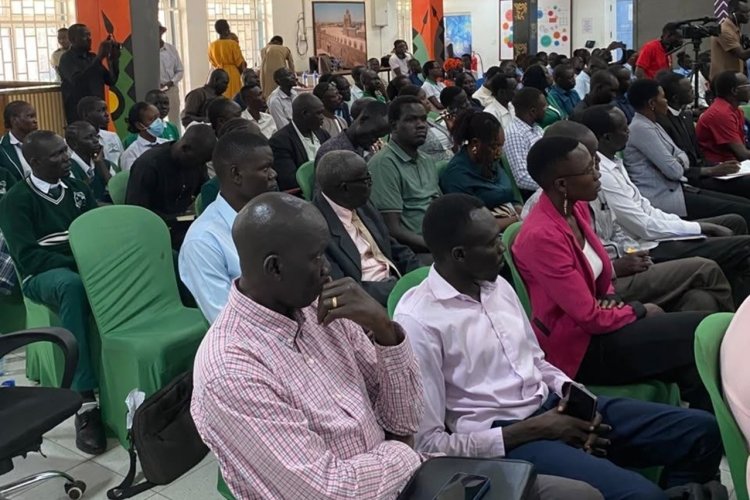
It brings together traditional and religious leaders, civil society representatives, a former member of South Sudan’s Transitional National Legislative Assembly and students from four universities in Juba to examine how different sectors can contribute to peacebuilding during the country’s political transition.
Discussions focus on the responsibilities of political institutions, traditional authorities, religious communities, women, young people and civil society in addressing divisions and strengthening social cohesion.
Edmund Yakani, Executive Director of CEPO, identifies tribalism, mutual distrust and political divisions as major obstacles to peace. He urges citizens to make informed choices in the forthcoming elections and calls on traditional and religious leaders to strengthen solidarity across communities.
Yakani also proposes establishing a “Citizen Peace Council” to translate dialogue into practical action and strengthen citizens’ participation in peacebuilding.
Participants emphasise that sustained dialogue, cooperation and public participation are essential to reducing tensions and building confidence among communities as South Sudan approaches the elections.
Traditional leaders urged to unite communities
Sultan Joseph Kuol Amet Kuol, Acting Secretary-General of NCOTAL and Paramount Chief of the Kuac Ayok Community, calls on traditional leaders to use their grassroots experience and moral authority to mediate disputes, restore trust and bring communities together.
He urges traditional authorities to work with government institutions and other stakeholders to advance reconciliation and sustainable peace.
Traditional leaders remain important figures in resolving local disputes and maintaining community relationships, particularly in areas where formal institutions face challenges in reaching remote populations.
Conference participants stress that closer cooperation between traditional authorities and other peacebuilding actors can help address grievances before they escalate into wider conflict.
Women and youth take centre stage
Ms. Jackline Nasiwa, representing CIGPJ, highlights the contribution of women to peacebuilding, arguing that they must be recognised as active participants in shaping peace rather than merely beneficiaries of reconciliation efforts.
She calls for stronger connections between women and men, communities and generations, and citizens and public institutions.
Her message reinforces the need for inclusive peace processes that recognise women’s role in addressing divisions and building trust within families and communities.
Young people also receive a strong call to action
Mr. Emmanuel William Atit, representing the South Sudan National Youth Union, urges young people to bridge divisions by promoting dialogue in schools, universities, local communities and on social media.
He encourages youth to challenge divisive attitudes and promote peaceful engagement among people from different backgrounds. Students attending the conference explore how they can carry peace values across generations and contribute to a more cohesive society.
Religious leaders promote peaceful coexistence
Religious leaders contribute perspectives on reconciliation and peaceful coexistence, highlighting the role faith institutions play in bringing communities together.
Those participating include Archbishop Dr. Justin Badi Arama of the Episcopal Church of South Sudan and Chair of the South Sudan Council of Churches; Sheikh Refat Juma Abdallah, Deputy Secretary for Organizations and Humanitarian Affairs of the South Sudan Islamic Council; and Rev. Fr. John Opi, Justice and Peace Coordinator of the Sudan and South Sudan Catholic Bishops’ Conference.
Participants call for closer cooperation among religious institutions, traditional authorities, civil society and political actors to rebuild trust and prevent conflict.
They also emphasise that peacebuilding must extend beyond conferences and formal declarations to reach communities directly, where local grievances and tensions require sustained attention.
Peace education campaign planned
At the conclusion of the conference, participants adopt a Joint Statement on Peacebuilding Action, outlining the responsibilities of political, traditional, religious and civil society actors in promoting reconciliation and national unity.
The statement also calls for a lasting legacy of peace to be passed to future generations through dialogue, cooperation and community engagement.
Organisers plan follow-up programmes to strengthen cooperation between existing peacebuilding organisations and young people, including university students, while extending dialogue and reconciliation activities to local communities.
As an initial step, they plan to launch the “Mr. Big Light” Peace Education Campaign, using local radio and other communication channels to share peacebuilding experiences and collect stories from residents.
The campaign is expected to develop into regular radio segments, talk shows and call-in programmes, giving citizens opportunities to discuss local challenges, share experiences and propose solutions for peaceful coexistence.
Through these activities, organisers seek to give communities a more direct role in peacebuilding and encourage dialogue across social and generational divides.
As South Sudan approaches the December elections, the central challenge is turning these commitments into sustained action. The conference places responsibility on leaders and citizens to confront mistrust, resolve disputes peacefully and strengthen cooperation across communities.
Whether the pledge delivers lasting change depends on how consistently the agreed measures are implemented beyond the conference hall.