By Rene Anthere Rwanyange
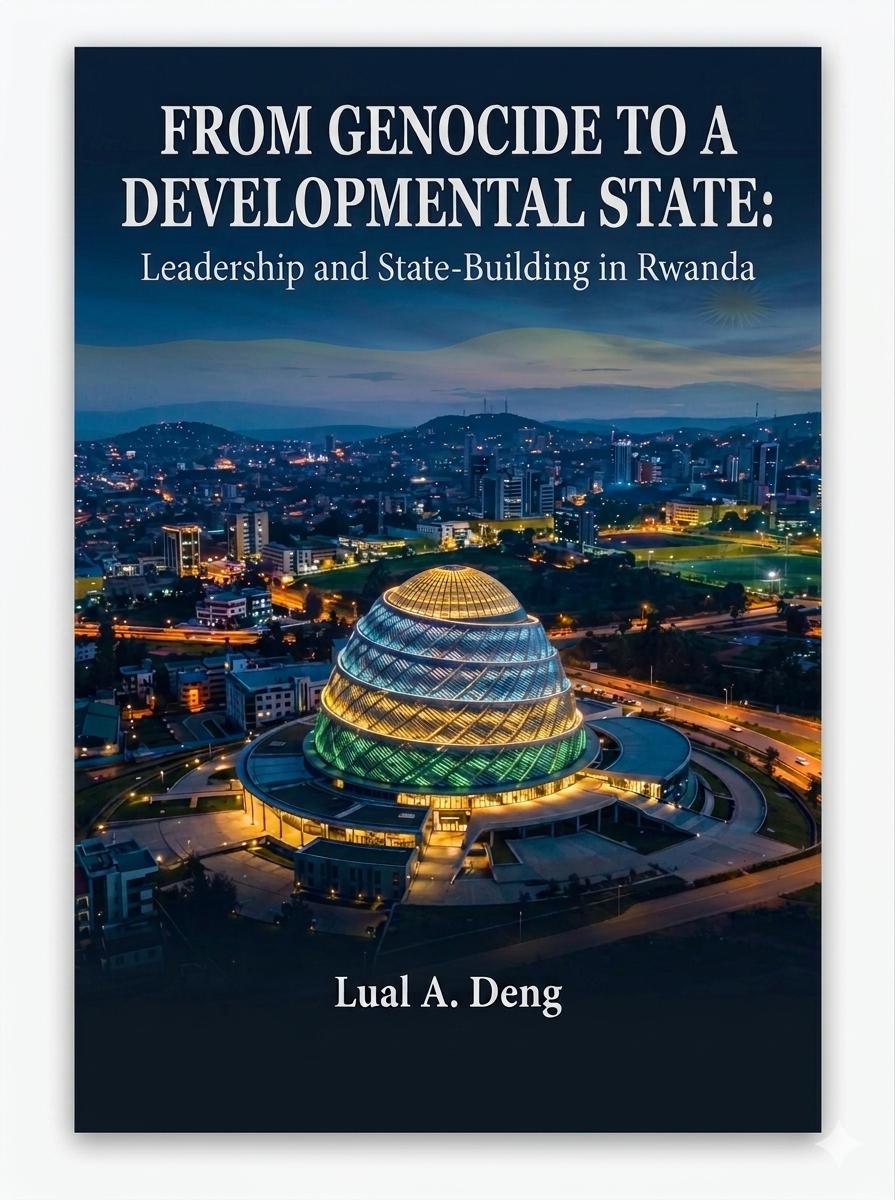
From Genocide to a Developmental State: Leadership and State-Building in Rwanda examines Rwanda’s transformation from institutional collapse after the 1994 genocide against the Tutsi to one of Africa’s most frequently cited cases of post-conflict reconstruction and developmental governance. The book argues that Rwanda’s transformation cannot be explained by leadership, institutions, economic policy, foreign assistance, or historical circumstances alone. Rather, it emerged through the cumulative interaction of political leadership, institutional reconstruction, strategic governance, implementation discipline, social legitimacy, and adaptive learning.
The book develops the Kagame Developmental Leadership and State Transformation Theory (KDLSTT), a dynamic institutional systems theory that explains how capable developmental states can be deliberately constructed under conditions of institutional fragility. Drawing upon development economics, institutional economics, governance theory, leadership studies, developmental state scholarship, and systems thinking, the study situates Rwanda’s post-1994 experience within broader debates on state-building and development.
By combining historical analysis with theory-building, the book contributes to comparative scholarship on developmental states, post-conflict reconstruction, African political economy, and institutional transformation. Rwanda is analyzed not as a model to be copied mechanically, but as an empirical case that illuminates the broader conditions under which states may recover from collapse and build durable developmental capacity.
Author Biography
Lual A. Deng is a scholar of development, governance, leadership, and African political economy. His work examines state-building, institutional transformation, post-conflict reconstruction, and the political economy of development in Africa. From Genocide to a Developmental State develops a new theoretical framework for understanding Rwanda’s post-1994 transformation and its broader implications for developmental leadership and state reconstruction.
Keywords
Rwanda, Genocide against the Tutsi, Developmental State, State-Building, Leadership, Governance, Institutional Transformation, Post-Conflict Reconstruction, Political Economy, Kagame Developmental Leadership and State Transformation Theory, KDLSTT, African Development, Public Administration, Institutional, Economics and Adaptive Governance.