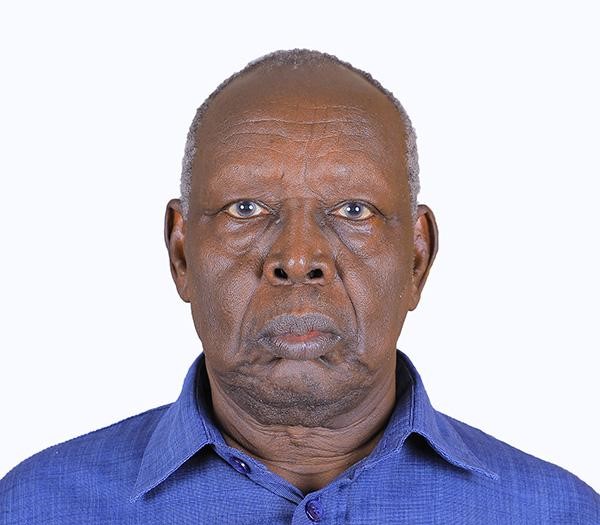
By Rene Anthere Rwanyange
From international development institutions to government and strategic research, Lual A Deng has built a career around economic policy, leadership, peacebuilding and the challenges of development in Africa.
Lual A Deng’s career reflects decades of engagement with some of Africa’s most pressing development challenges, combining academic research, international economic policy, government service and political leadership.
Educated in Sudan, Egypt and the United States, Deng has worked with major international development institutions, advised South Sudan’s liberation leadership, served in Sudan’s government and held a legislative position in South Sudan. He currently serves as managing director of the Ebony Center for Strategic Studies, a non-profit research institution based in Juba.
His professional journey has been shaped by a central concern: how economic knowledge, effective leadership and sound public policies can contribute to peace, sustainable development and poverty reduction.
An academic foundation across three countries
Deng’s academic journey began in Sudan, where he obtained a Bachelor of Science degree in Economic Statistics from the University of Khartoum in 1973.
He subsequently moved to Egypt, earning a master’s degree in Biostatistics from the University of Alexandria in 1976. He later pursued further studies in the United States, obtaining a master’s degree in Economics from Iowa State University in 1982.
In 1984, he completed a doctorate in Development Economics at the University of Wisconsin–Madison, equipping him with an academic foundation in economic analysis and development policy.
His education across three countries provided a multidisciplinary background that would inform his subsequent work in academia, international development and public administration.
Following his doctoral studies, Deng began his academic career as a tenure-track assistant professor of economics within the University of Wisconsin Center System, serving from 1985 to 1986.
Although his university teaching career was relatively brief, it marked the beginning of a professional trajectory that would take him into international financial institutions and senior government positions.
From international development to public policy
In 1986, Deng joined the African Development Bank (AfDB) as a country economist, serving until 1989. He then moved to the World Bank, where he worked as a senior economist from 1989 to 1991.
He subsequently returned to the African Development Bank, where he served as division chief responsible for environment and social policy. These positions placed him within institutions involved in economic development, public policy and the financing of development initiatives across Africa.
His experience in international development provided exposure to the policy questions facing African economies, including the relationship between economic growth, social welfare, environmental sustainability and public institutions.
This combination of economic expertise and policy experience later became relevant to his engagement with political leadership and government in Sudan and South Sudan.
Advising John Garang and serving in government
Between 2003 and 2005, Deng served as an economic adviser to Dr. John Garang, the Sudanese political and military leader who headed the Sudan People’s Liberation Movement/Army (SPLM/A).
The period was significant in Sudan’s political history, as negotiations and political developments culminated in the Comprehensive Peace Agreement signed in January 2005, which paved the way for an interim period and South Sudan’s eventual independence in 2011.
Deng’s role as an economic adviser placed him within discussions about the economic and institutional challenges facing Sudan and the future of South Sudan.
Following the 2005 peace agreement, he joined Sudan’s Government of National Unity, serving as state minister of finance from 2005 to 2010 and minister of petroleum from 2010 to 2011.
His responsibilities brought him into two strategically important areas of public administration: public finance and petroleum governance.
Finance policy is central to government planning, expenditure management and the allocation of resources to national priorities. Petroleum, meanwhile, was particularly important to Sudan’s economy and became a major economic and political issue during the transition to South Sudan’s independence.
Deng’s experience in these portfolios gave him direct exposure to the complexities of managing public resources during a period of political transition.
Legislative service and economic research
After South Sudan gained independence in July 2011, Deng became a member of the country’s Transitional National Legislative Assembly, serving from July 2011 to September 2026, according to his professional record. His legislative experience extended across a formative period in the development of South Sudan’s political institutions.
In addition to his government and legislative responsibilities, Deng has continued to engage with development issues through research and writing. He is currently the managing director of the Ebony Center for Strategic Studies, a non-profit research institution based in Juba.
His current role places him within the research and policy community examining the challenges of governance, economic development and sustainable peace in South Sudan.
Deng’s career spans academia, international financial institutions, government and legislative service. This combination offers a perspective on development that connects economic theory with public administration and political decision-making.
Books on peace, leadership and African development
Deng has also used writing to explore questions of development, leadership, peace and state-building. His publications include Rethinking African Development: Toward a Framework for Social Integration and Ecological Harmony, published by Africa World Press in 1998.
In 2020, Africa World Books published his book The National Dialogue: A Framework for Sustainable Peace, Economic Growth, and Poverty Eradication in South Sudan. The work addresses the relationship between political dialogue, peace and the country’s development ambitions.
His 2025 publication, The Power of Creative Reasoning – The Ideas and Vision of John Garang, examines the ideas and vision associated with the former SPLM/A leader. And the latest listed book, From Genocide to a Developmental State: Leadership and State-Building in Rwanda, was published by Africa World Books in 2026.
The Rwanda-focused publication adds another dimension to his engagement with African development, examining leadership and state-building through the country’s historical experience.
Taken together, these books reflect his sustained interest in how African countries can address conflict, strengthen institutions, promote social integration and pursue economic transformation.
A career shaped by development questions
Lual A Deng’s professional journey brings together several fields that are often examined separately: economic research, international development, political leadership, public finance and institutional reform.
From his early academic training to his work with the African Development Bank and World Bank, his career has involved the analysis of economic and development challenges. His subsequent service in government and the legislature brought him closer to the political institutions responsible for shaping and implementing public policy.
Through his leadership at the Ebony Center for Strategic Studies and his published work, he continues to engage with questions about South Sudan’s future and the wider challenges of African development.
His professional record illustrates the intersection of technical expertise and public service, while his books provide a platform for examining the ideas, leadership choices and institutional arrangements that influence the continent’s development trajectory.
For South Sudan, a country whose post-independence experience has been marked by difficult questions of peace, governance and economic development, the connection between research and public policy remains particularly important.
Deng’s career places him among the professionals whose work has crossed academic, international and national institutions, contributing experience and analysis to debates about the country’s development and Africa’s broader transformation.