By Rene Anthere Rwanyange
Honorable Protais Musoni, Chairperson of the Pan-African Movement (PAM), Rwanda Chapter, calls on African writers to strengthen advocacy for continental unity, free movement and knowledge-based development, saying literature plays an important role in shaping Africa’s future.
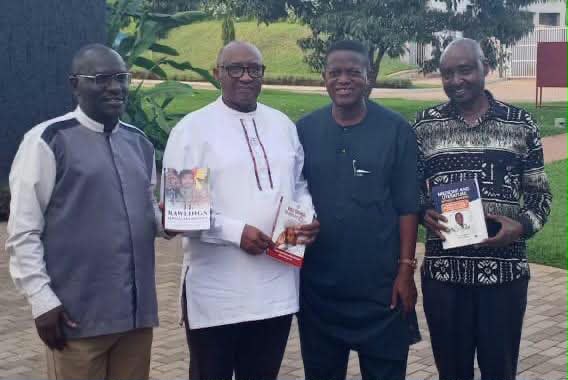
Hon. Musoni makes the call during a meeting with leaders of the Pan-African Writers Association (PAWA) and the Rwanda Writers Federation in Kigali on Monday, November 9, 2026.
The meeting brings together Dr. Wale, Secretary General of PAWA; Richard Hategekimana, Chairman of the Rwanda Writers Federation; and John Rusimbi, former President of PAWA.
It follows the Africa Writers Day 2026 celebrations held at Kigali Serena Hotel on November 7 under the theme, “African Writers at the Heart of Africa’s Transformation: Writing Our Stories, Preserving Our Heritage and Building a Knowledge-Based Continent.”
Hon. Musoni commends PAWA for promoting African literature, preserving cultural heritage and strengthening intellectual cooperation across the continent.
He says Africa’s sustainable transformation depends on knowledgeable, educated and innovative citizens, urging writers to promote reading, research, critical thinking and knowledge-sharing as essential drivers of development.
“African writers should not limit themselves to producing books. They must also become influential voices in shaping Africa’s future, promoting African interests and contributing to the continent’s development,” Hon. Musoni says.
He further challenges writers to take an active role in public debate, policy discussions and efforts to mobilise communities towards continental transformation.
A key issue during the meeting is PAWA’s role in advancing the African Union’s Agenda 2063, particularly through mobilising writers and intellectuals to promote continental integration.
Hon. Musoni urges the association to advocate for visa-free movement across Africa and the removal of unnecessary barriers that restrict the movement of African citizens.
He also highlights the importance of the African Continental Free Trade Area (AfCFTA), calling on writers to raise awareness about intra-African trade, economic cooperation and entrepreneurship.
Other priorities include protecting African languages and cultural heritage, strengthening education and research, promoting peace and good governance, and encouraging intellectual participation in achieving the African Union’s vision of “The Africa We Want”.
In his view, literature must become an instrument for influencing policies, inspiring societies and mobilising future generations towards a united and prosperous continent.
In his response, Dr. Wale thanks Hon. Musoni for his recommendations, particularly those concerning Agenda 2063, free movement and the contribution of writers to Africa’s development.
He acknowledges the importance of turning the proposals into practical initiatives, committing PAWA to mobilising its members, national writers’ associations and literary institutions across Africa.
“African writers have a historic responsibility to contribute to building a united, peaceful, prosperous and knowledge-driven Africa,” Dr. Wale says.
He emphasises that PAWA must strengthen its role beyond literary activities and become an influential intellectual platform contributing to continental policy discussions and development priorities.
Dr. Wale also commends Richard Hategekimana for his leadership in organising the Africa Writers Day 2026 celebrations in Kigali, which bring together writers, publishers, policymakers, government representatives and other stakeholders.
The event serves as an important platform for strengthening literary cooperation and highlighting the contribution of African writers to the continent’s transformation.
The participation of former PAWA President, John Rusimbi, also highlights the importance of institutional continuity and cooperation between current and former leaders in advancing African literature. The meeting reinforces the principle that Africa’s future must be shaped by African knowledge, values and collective efforts.
As its participants emphasise, “Africa’s future must be written by Africans, shaped by African knowledge, inspired by African values and built through African unity”.
The discussions underline the need for stronger collaboration between Pan-African movements and literary institutions to promote African identity, shared opportunities and development aspirations.