
























































































































By Aggie Asiimwe Konde Director, Communications, Innovations, External Engagements and Advocacy at AGRA

Why the next wave of competitive advantage in African markets will be built from the ground up?
Agriculture begins with soil, but for Africa’s growth story, soil is far more than an input. It is the foundation of food systems, the basis of livelihoods, and an increasingly critical lever for resilience, reliability, and long‑term value creation.
Across the continent, soil holds the potential to address food insecurity, restore ecosystems, and unlock economic growth at scale. Yet that potential remains largely unrealised, not because of lack of effort, but because the core asset underpinning agricultural systems has been systematically undervalued.
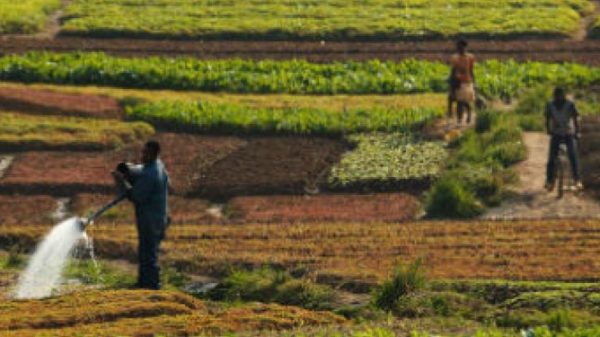
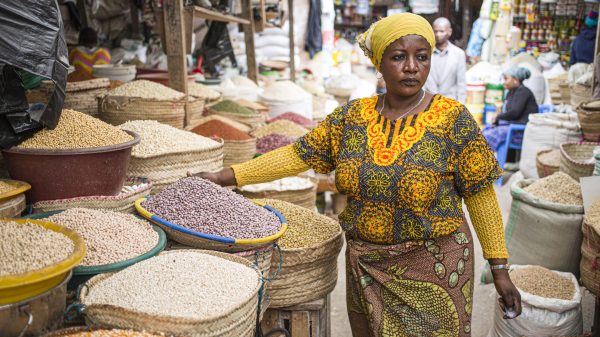
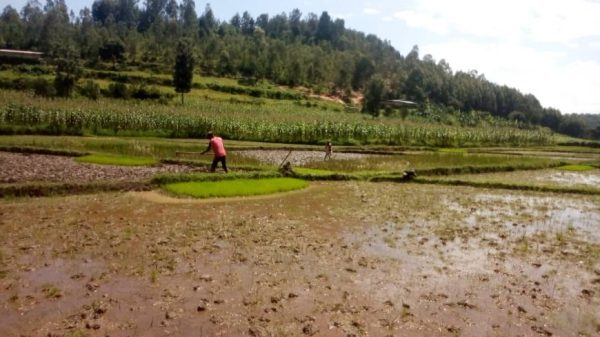
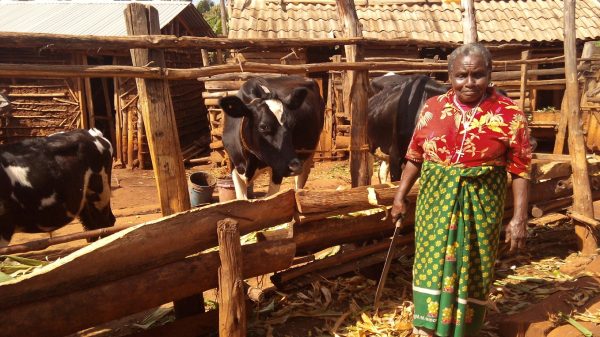
Consider a typical smallholder farmer managing at least three acres of land. Each season, she commits her primary productive assets, land, labour, and inputs into the business of farming. She prepares the land, purchases seed and fertiliser, plants, weeds, and manages crops through increasingly volatile weather patterns. The investment of time, effort, and capital is substantial and sustained.
Too often, however, the system fails to break even. Once input costs, labour, climate risk, price volatility, and post‑harvest losses are factored in, farming frequently struggles to generate sufficient surplus to reinvest. Productivity remains stagnant, vulnerability persists, and each season begins from a position of fragility.
In any other sector, this would signal a structural problem. Capital does not flow to businesses where the core asset is degrading, efficiency is declining, and returns fail to justify risk. Manufacturing systems are redesigned when productivity falls; retail models are restructured when margins erode. Yet in agriculture, this dynamic has been normalised.
The constraint is not farmer effort. It is that soil; the primary productive asset is rarely managed as one.
For decades, soil has been treated as a passive medium rather than as capital. Uniform input approaches have been applied across highly variable and often degraded landscapes, leading to diminishing returns over time. Nutrients are added, but crops respond weakly because the biological and physical systems that make soil productive have been compromised.
The result is a cycle of continued investment with limited payoff. This is where the concept of a tipping point matters.
Agricultural systems do not improve incrementally. They operate around a threshold that determines whether farming functions as a survival activity or as a viable enterprise. Below this threshold, productivity remains low, soil health declines, and income barely covers costs. Any external shock, whether climatic or market‑related, pushes the system deeper into risk.
Beyond it, the system behaves differently.
When soil health improves to the point where nutrients are efficiently utilised, water is retained, and biological processes support plant growth, productivity stabilises and begins to rise. At that point, farming crosses a break‑even threshold. Surplus becomes possible. Reinvestment becomes rational. Agriculture shifts from coping to competing.
This transition is not about marginal gains. It is structural.
Crossing the tipping point requires deliberate soil management: rebuilding organic matter, restoring biological activity, and applying inputs in a targeted way aligned with actual soil needs. Water management, crop selection, and agronomic practices must also reflect local conditions rather than one‑size‑fits‑all models.
When these elements align, the economics change measurably. Crops access nutrients more effectively, soils retain moisture longer, and systems become less sensitive to seasonal variability. Evidence from integrated soil and landscape restoration across Africa shows sustained productivity gains alongside reduced degradation, demonstrating that this shift is both possible and scalable. Crucially, these gains compound over time.
Once farms consistently operate beyond the break‑even point, behaviour changes. Reinvestment in better technologies becomes the norm. Diversification into higher‑value production becomes feasible. Soil organic carbon accumulates, creating optionality around emerging climate and sustainability markets. Improved water retention reduces dependence on rainfall alone. At this stage, farms are no longer just producing crops. They are building assets.
For businesses operating in African markets, the implications are significant.
Brand equity is often understood as trust, credibility, and relevance built over time. In food and agriculture systems, that equity is not only intangible, but also physical, embedded in the soil. Soil health determines whether farmers can produce reliably, whether supply chains hold under pressure, and whether shocks can be absorbed without disruption.
When farming systems remain below the tipping point, supply chains are unstable, costs are unpredictable, and trust is fragile. When systems move beyond it, reliability improves, resilience strengthens, and long‑term partnerships become viable.
Soil, in this context, is not simply an environmental concern. It is a strategic asset.
Investing in soil is therefore not a peripheral ESG activity. It is a system‑level intervention that strengthens productivity, stabilises supply, mitigates climate risk, and underpins durable growth. For companies seeking long‑term advantage in African markets, soil sits at the centre of value creation.
Africa’s growth will ultimately depend on whether its foundational systems can generate surplus rather than absorb effort. The brands that recognise this and invest accordingly, will be those best positioned for the next decade of growth, built from the ground up.