

































































































By: Jeanne d’Arc Munezero
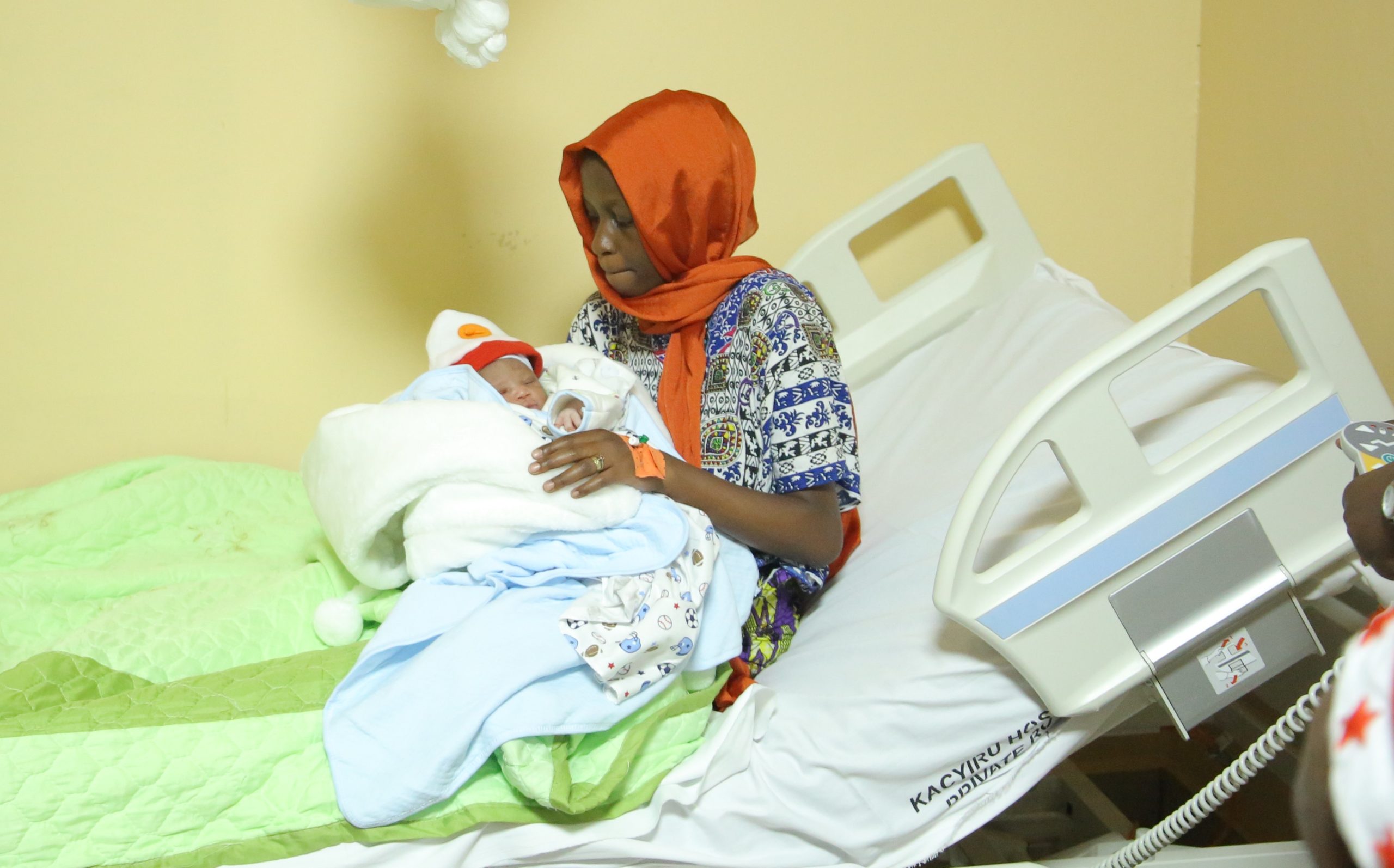
In 2020, Solange Uwineza gave birth to a baby boy in the Bwishyura sector in Karongi, but she had difficulty registering her own child.
It was impossible for her to do so because civil register officials required her father’s details, who was absent in Uganda. She had also lost her national identity card.
“With the father away in neighbouring Uganda, I couldn’t register the child alone. Part of the reason was because of the fine and I was still feeling pain. I also needed time to decide on the baby’s name,” she said.
Uwineza was not alone. Bosco Kayiranga a teacher by profession and a father of three children in Gatsibo district explains that the process was tedious. It required time where civil registers could not easily be found at the office and we had to walk to and from to be registered.
The identity gap is still quite evident because of historical background, time and geographical access challenges.
Previously, civil registrars in the sector where the birth or death occurred were the only ones authorized to register new borns and their descendants.
As part of the efforts to promote registration services, the government has aimed more at a sound population surveillance system and balancing population growth.
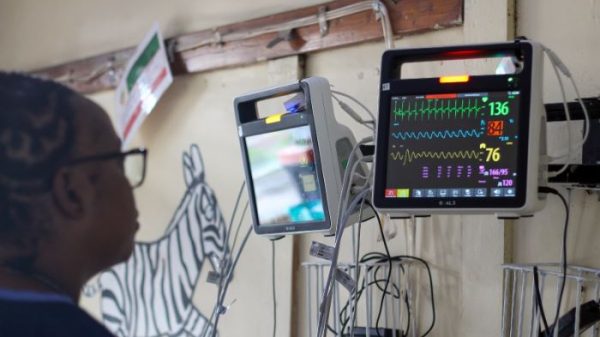
In August 2020, Rwanda introduced a birth and death registration system in all health centers and hospitals across the country.
For Uwiragiye, that was an opportunity. Her child was registered during the pandemic in early 2022. Thanks to the awareness campaign by community health workers about the new system introduced at the health center, it streamlined the procedures and registration process.
“I was not fined and did not line up or take longer to get my child registered. I was only told to bring a family guardian,” she points out
“The process is now streamlined at health centers. It’s free and mandatory, and it helps to have birth certificates for child protection reasons, education reasons, in heritance and also for those who travel abroad.” Bosco Kayiranga points out adding that it also helps citizens to have a known identity, which is used to enforce their rights to vote, be elected, inherit, etc.
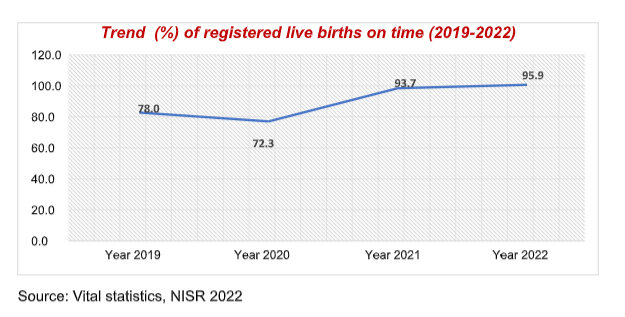
According to the trend of the live births registered on time as stipulated by family law, in 2019, the figure was 78.0. percent. In following year, it dropped to 72.3 percent and in 2021 and 2022 it increased to 93.7 percent and95. 9 percent respectively.
Graph showing Trend of (%) of registered live birth on time( 2019-2022) in Rwanda
Birth registration completion in Rwanda in 2022 stood at 92.9 percent, with 341,122 births recorded, according to the survey published by the National Institute of Statistics of Rwanda (NISR).
Health facilities registered 337,233 live births in 2022, according to the report. Among these, male live births were high at 170,677 compared to female live births totaling at 166,556.
Graphy showing total live births registered at health facilities in year 2022
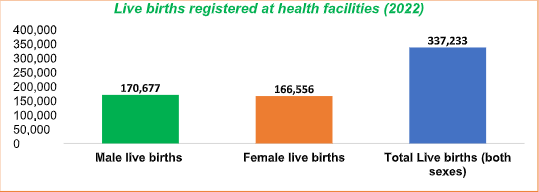
Source: Vital statistics, NISR 2022
More female live births were registered by sex at a 1.2 percent increase compared to male live births last year.
The completeness of birth registration in North Province was high in the districts of Gakenke and Gicumbi, respectively, at 98.7 percent and 98.6 percent.
The study found that the reason is that the North province is more urbanized and awareness is higher compared to other provinces.
Civil registration services in the City of Kigali were also high, according to the survey because they’ve been decentralized to cell levels, which has made birth registration services more accessible to parents.
Pie Charting showing percentage share of live births registered at health facilities by sex
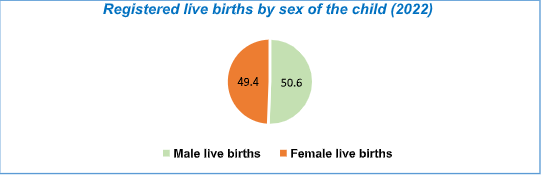
Source: Vital statistics, NISR 2022
Table showing status of Birth registration by province, and by rural and Urban Rwanda
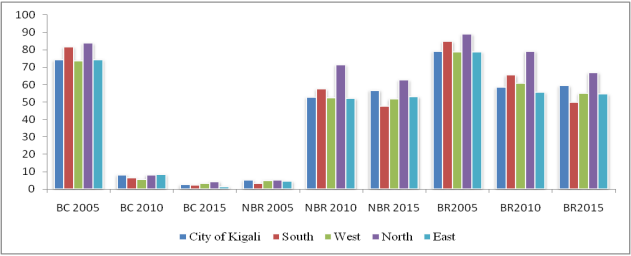
Source: Vital statistics, NISR 2022
In addition, birth registration and notary services officers in the City of Kigali take personal initiatives to reach out to families in their respective villages and register their children.
Besides, there were disparities among districts with Nyagatare and Karongi recording a lower rate at 83.2 percent and 88.6 percent respectively.
Umuhoza Pascasie, the Vice Mayor of the Karongi District, in charge of Social Welfare says that the reason why the district recorded rates is because there were parents who came to give birth without an identification card, or a replacement, and themselves were not registered.
However, she noted that efforts are being made to advise health centers to advise working closely with the sector to solve the problem of undocumented expectant mothers.
“The district has appointed an employee who deals with such problems that are failing in sectors”, she notes, adding that parents and families must also respect their children’s basic rights, which include enrolling them in the education system on time because that affects the child and the country’s development.
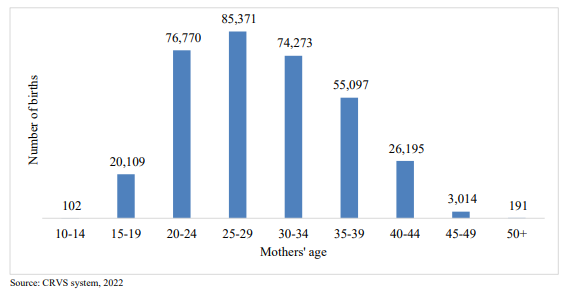
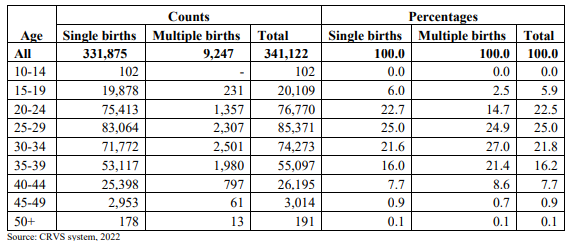
The CRVS system-generated data were analyzed to find out the rate of multiple births and the results revealed that out of 341,122 live births registered only 9,247 (2.7 percent) were multiple births (twins, triplets, etc) while the remaining share was singleton births.
Across age groups, the rate of multiple births is reported to be high for females aged 30-34 while the rate of single births is high for females aged 25-29.
Graph showing Registered live birth by age of mothers
A Table below shows the frequency of single and multiple births across age
groups of mothers
There is a variation in the weights of the newborns by weight ranges where in 2022, the weight range with a high number of births was 3000-3499 grams. The same range contains an average (3081 grams for both sexes).
Analysis from the findings shows that in 2022, females’ average weight at birth was slightly less than males’ average (3,034 grams for females Vs 3,126 grams for males).
While the percentage of low birth weight (<2500 grams) and very low birth weight (<1500 grams) were relatively small (7.7 percent and 1.1 percent, respectively), though slightly increased compared to the 2021 results (6.5% and 1.0%, respectively).
The survey identified some challenges associated with low birth registration, which included overlapping systems of children registrations, high transaction costs which included fines, insufficient proposed duration for birth registration and inefficiencies in the registration system along with cultural barriers hindering parental compliance.
To bridge these gaps, the government of Rwanda amended its law to ease the birth registration process. The registration period has been extended from 15 days to 30 days, while fines for delays and other court processes have been scrapped, aiming to encourage higher rates of birth’s registration.
The matter of birth registration is governed by Rwandan Law No. 32/2016 governing persons and families. Article 100 of this law ensures that every child shall be declared within thirty days after birth.