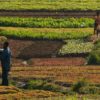
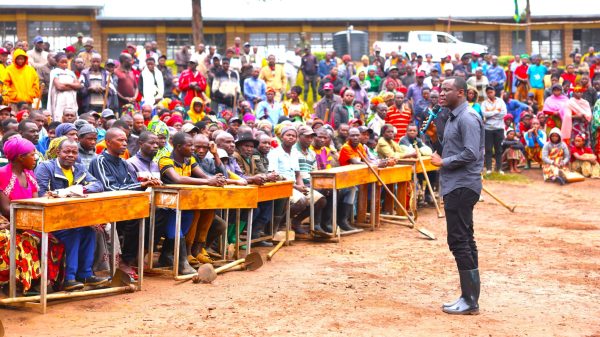



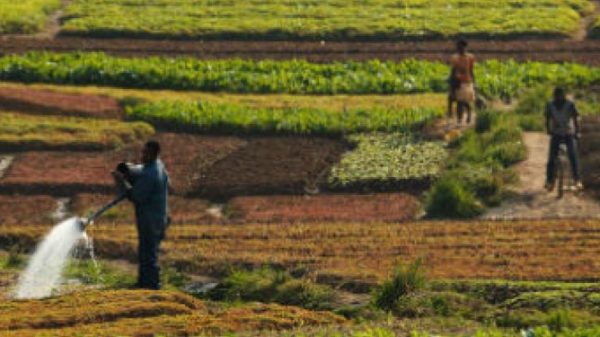











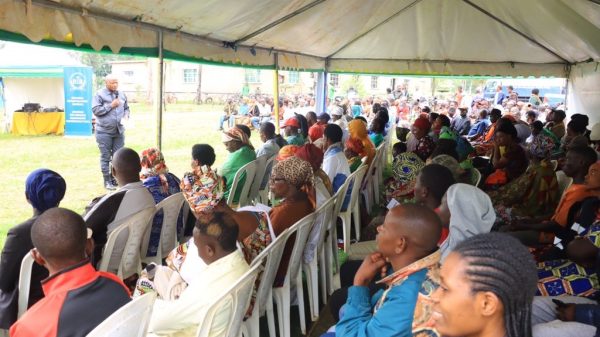




































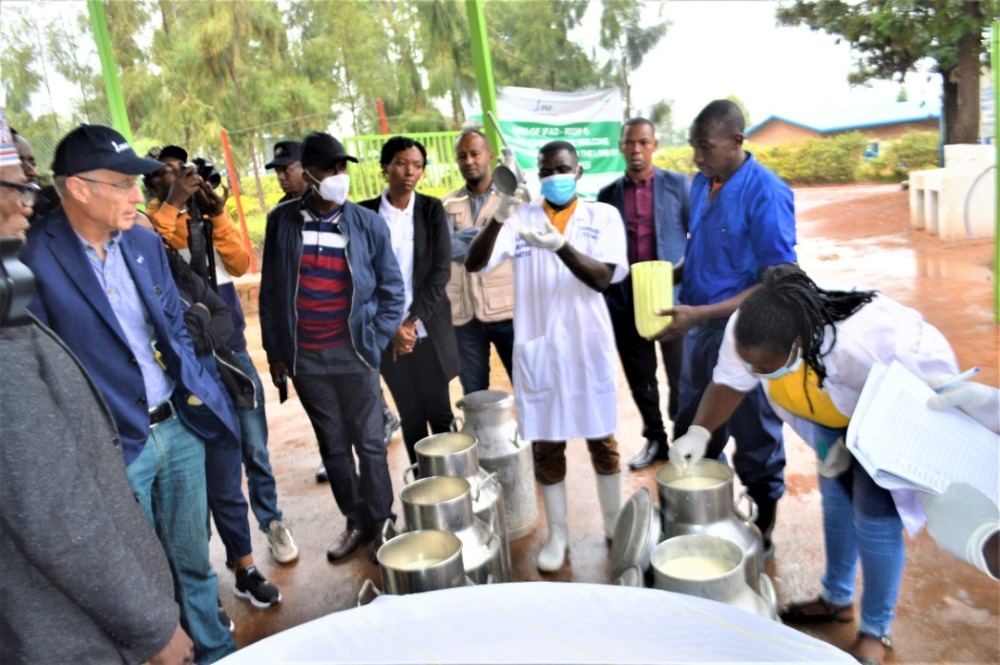
Rutare and Byumba sector dairy farmers in Gicumbi district are proud of the progress they have reached through the RDDP (Rwanda Dairy Development Project) which aims at helping farmers profitably collect, process and distribute milk.
RDDP is a project of the Ministry of Agriculture and Livestock, operated under the Rwanda Agriculture Board (RAB) and funded by IFAD.
Members of the KOZAMGI Cooperative, which has a milk collection facility in Rutare Sector say that since they joined the cooperative their lives have changed to a great extent.
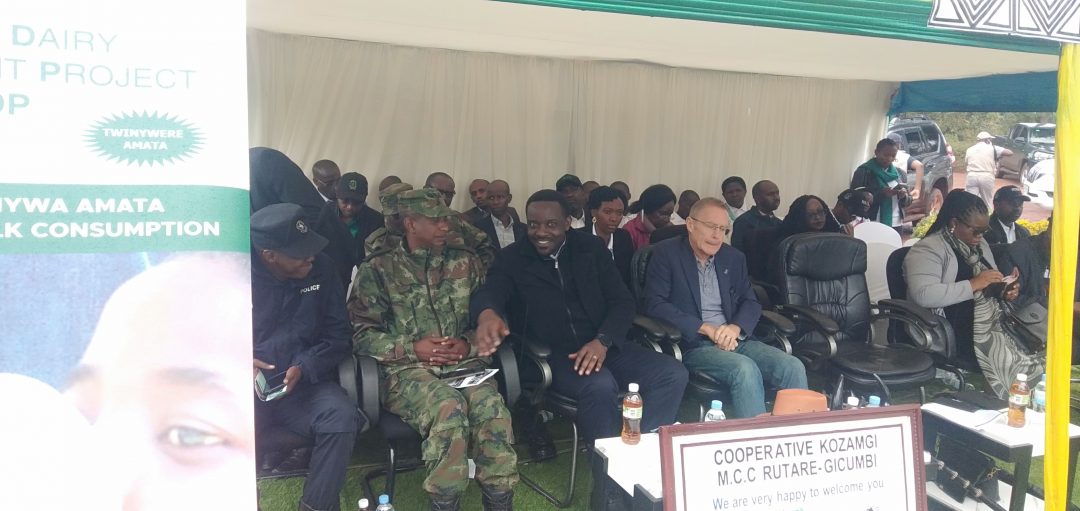
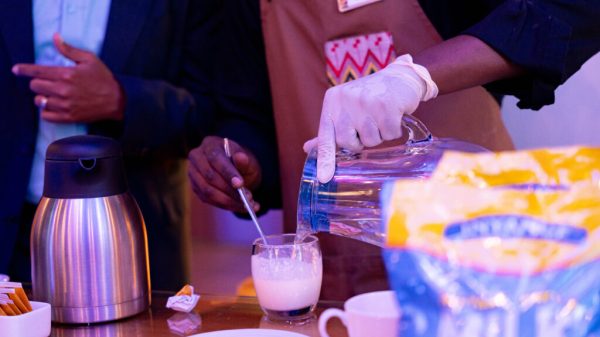
The Cooperative has helped them take care of their own families, cater for vulnerable families by giving them free milk and fight malnutrition and stunted growth.
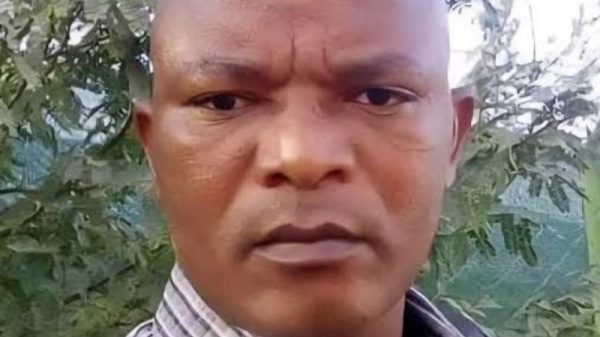
Emmanuel Byabahimana, one of the members said, “I was living without a job and living in poverty. RDDP trained me in milking for the Cooperative. I am now married with four children who have no problems. I milk cows that produce 20litres a day. This project gave me a motorcycle to use. I encourage everyone to join the cooperative because it is a way of reaching financial steps otherwise you would not easily reach”
Jerome Bapfakurera who is also a member of KOZAMGI, said, “As of now, I don’t have school fees challenges for my children. When cows get sick, we get money to take care of the cows. If it wasn’t for this project, I don’t know where I would be now”
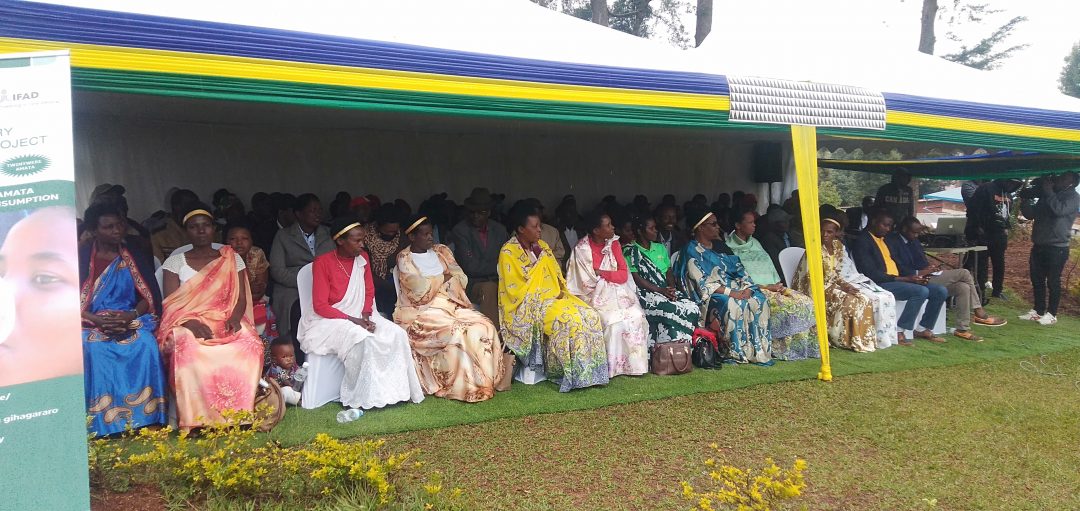
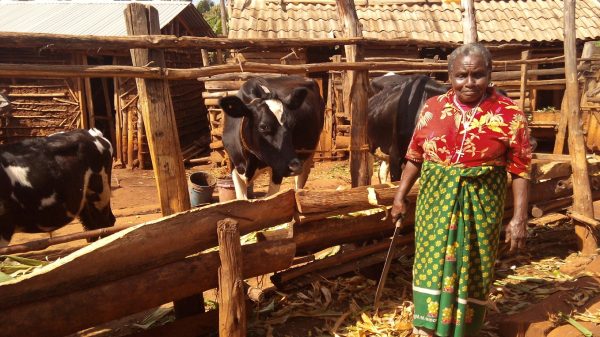
Cesaria Munkubito says that working together in a cooperative has helped her children remain in school, and those who were malnourished have recovered and are learning better. He says, “My three cows are now milked 10 litres each. I now milk three cows in a modern barn. We get enough milk for children at home”
The Project Coordinator of KOZAMGI Cooperative, Rashid Ntabanganyimana, said that before receiving IFAD support, their milk production was not at the level of the collection because they did not have basic equipment. He also says that the Ministry of Agriculture and Livestock was about to ask them to stop dairy farming.
He says, “RDDP started with the assistance of up to 80 per cent we as members getting contributing 20 per cent. It required us to work hard because we couldn’t even get loans from financial institutions when we couldn’t get any collateral ourselves.”
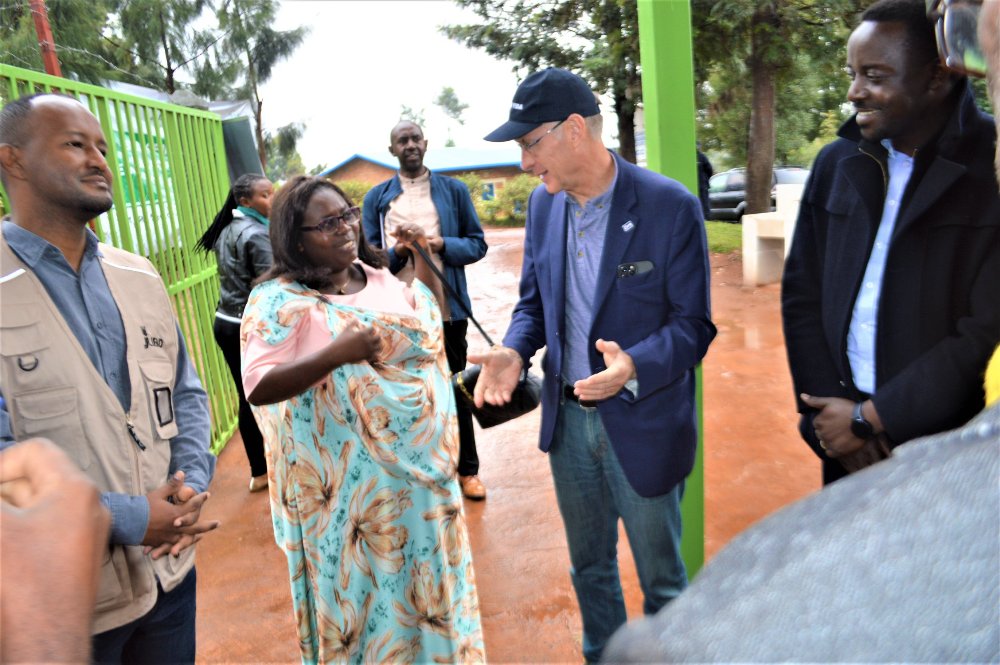
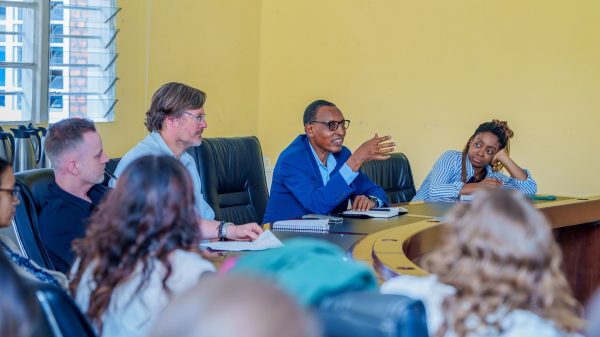
The Associate Vice-President, Programme Management Department at the IFAD, Mr. Donal Brown, who is on a visit to Rwanda, said that among many donor countries, Rwanda shows uniqueness in the efficient use of the aid given, a point that makes it one of the important partners of this fund.
He said, “What I have seen from the Rwandan people in the various trips I have been to, is that the support they have received is productive so that if you give them one thing, they will be able to do the other”
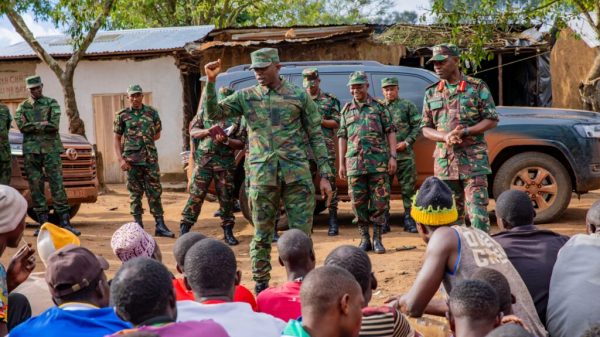
The leader assured the farmers of Gicumbi that although the first phase of the program to support them is going to end after six years, they are ready to continue in the second phase in cooperation with the Government of Rwanda in order to accompany the farmers in their self-sustenance journey.
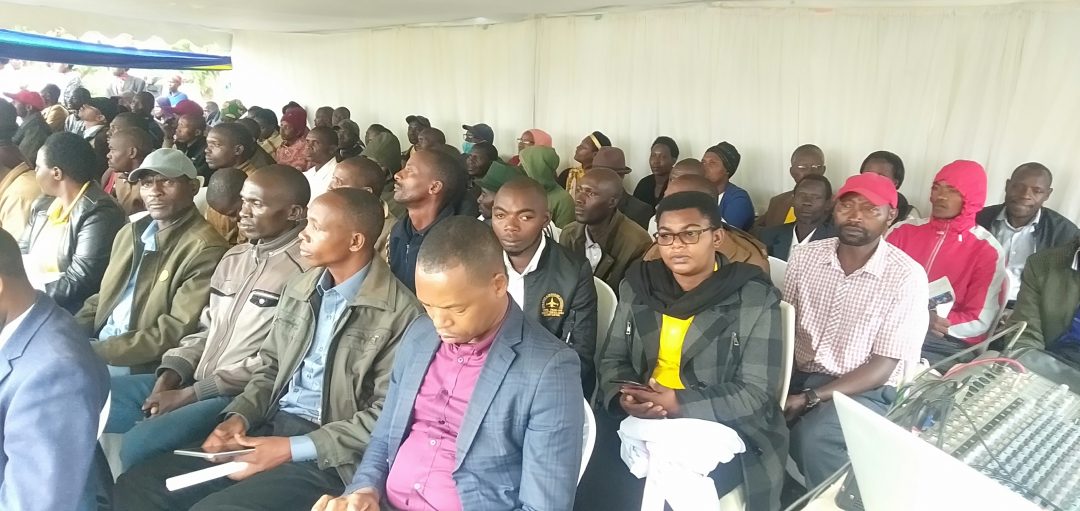
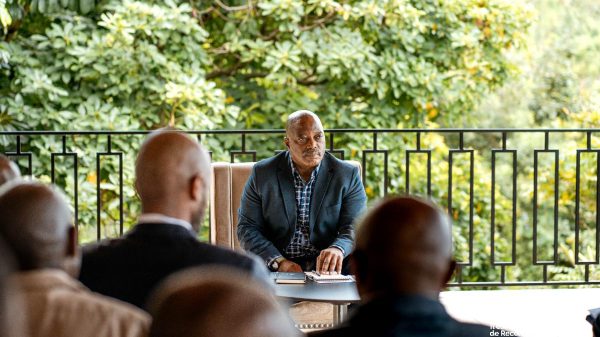
The Deputy Director at RAB Dr Solange Uwituze, said that the assistance they provided especially in the Rutare Sector made farmers better collect and handle milk production would result in business strengths, unlike in the past.
“These farmers now consider themselves partners of the region because there is a program in which they participate in providing milk to families in need at no cost,” Uwituze said.
Since its establishment in 1978, IFAD has been committed to supporting various agricultural and livestock activities around the world in order to reduce the rate of hunger.
The activities and projects supported by this fund have contributed to changing the lives of over 518 million people around the world. In Rwanda, IFAD supports agricultural and livestock activities and projects in 14 districts across the country.
Munezero Jeanne d’Arc