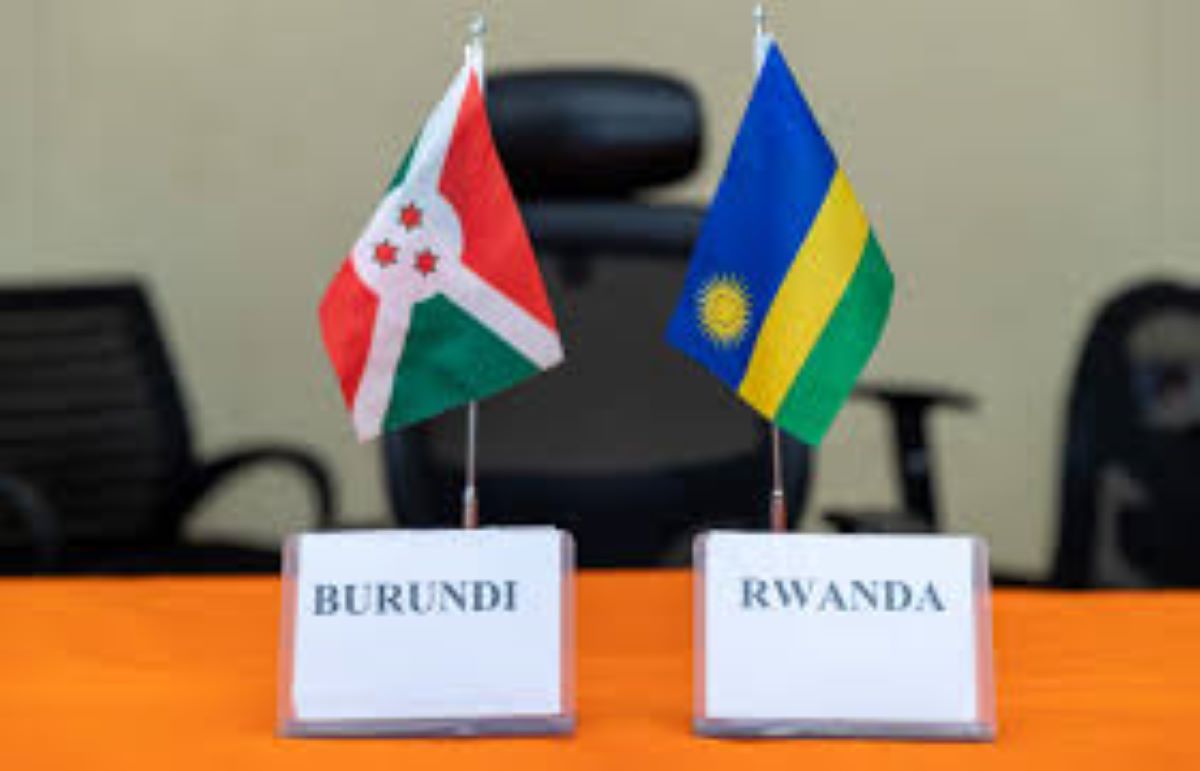
Opinion and Analysis, by NSENGIYUMVA Patrice
 This article is part of our ongoing analysis of current conflicts and wars, aiming to advocate for a peaceful and dignified world for men and women affected by these crises. Today, we examine the issue of the border closures between Rwanda and Burundi, which continue to cause concern, as these borders have been shut multiple times with increasingly worrying consequences:
- The first major closure occurred in 2015, under the late President Pierre Nkurunziza during the Burundian political crisis, amid mutual accusations of support for rebel groups.
- In October 2022, Burundi announced the reopening of its borders with Rwanda after nearly six to seven years of closure.
- Then, on 11 January 2024, Burundi closed its borders again in response to allegations that Kigali was supporting Burundian rebels (the RED-TABARA group).
Historical political and security tensions have erupted into crisis. Each country accuses the other of supporting armed groups and interfering in internal affairs. Recent cross-border incidents have been sufficient to disrupt trade and isolate border communities.
Why good neighborliness is vital?
Good neighborliness rests on three pillars: respect for sovereignty, non-interference, and dialogue. It is not merely a diplomatic concept; it is practical. Border populations rely on stability to survive and thrive. Traders, farmers, tourists, students, families—all suffer the consequences of closed borders. Regional supply chains are disrupted, and social cohesion weakens.
Economic and social consequences
Thousands of cross-border traders lose their livelihoods. Families are separated. Access to markets, tourism, sporting and cultural events, and essential services is blocked. Communities that share languages and cultures feel the weight of mistrust. This crisis is not limited to governments; it affects the daily lives of thousands, many of whom struggle to understand the real reasons behind a closure that has persisted in some form since 2015.
Among those affected are Burundian refugees, languishing in the Mahama refugee camp or scattered across Rwandan cities and towns, while their property left in their homeland deteriorates day by day.
Three Approaches to Restore Trust
- Dialogue and Diplomacy:
Even in disagreement, communication channels must remain open. Clarifying concerns and sharing information helps prevent escalation. The history of the Great Lakes region shows that the cost of broken dialogue often exceeds the conflict itself.
- Security cooperation:
Rwanda and Burundi face the same threats: smuggling, armed groups, and criminal networks. Joint patrols and intelligence sharing can prevent incidents and stop political tensions from becoming a security crisis.
- Protection of social and economic ties:
Freedom of movement, market access, and the preservation of cross-border livelihoods must guide any solution. The gradual reopening of borders is not only a diplomatic gesture but also recognition of historical and human ties between the peoples.
The Role of leaders
Leaders must demonstrate political will to resolve disputes. Bilateral visits, public commitments, and confidence-building initiatives are essential. Strong leadership can restore cooperation and reassure populations.
The Role of regional organisations
The Economic Community of the Great Lakes Countries (CEPGL) remains active and can play a decisive role, despite challenges. The East African Community (EAC) and the African Union (AU) also have crucial roles: mediation, monitoring agreements, and assisting affected populations. Their involvement could ensure that solutions benefit citizens, not just governments.
However, why do these regional organisations, civil society, and the media not exercise enough influence to secure a proper resolution? The protracted nature of this crisis—while Rwanda hosts Burundian refugees and the FDLR and RED-TABARA continue to operate—has allowed the status quo to persist, sometimes exacerbated by Gitega for political interests of the ruling party (CNDD-FDD).
Conclusion: Peace depends on good neighborliness and History can inspire us!
This article is inspired not only by our global peace network, “NO TO WARS, YES TO PEACE!”, but also by the historical agreements known as “Utwicarabami twa Nyaruteja”.
The term “Utwicarabami twa Nyaruteja” (sometimes written I Twicara-bami twa Nyaruteja) literally means “The place where the kings sat at Nyaruteja.” It is a symbolic site in what is now the Southern Province of Rwanda, in Gisagara District, Nyanza Sector.
Historically, it was chosen for a solemn meeting and pact between two monarchs: King MUTARA I SEMUGESHI of Rwanda and KING MUTAGA II NYAMUBI of Burundi. The agreement was a non-aggression pact: neither kingdom would aid a third party attacking the other.
The Rwanda–Burundi crisis underscores a key lesson: regional peace is an ongoing process. Dialogue, cooperation, and trust are indispensable. Good neighborliness is not merely a diplomatic principle—it is the key to protecting populations, securing trade, and ensuring sustainable development. Reopening borders and strengthening cross-border cooperation must be a priority, supported by leaders and regional institutions. Again, and I will repute it again, let’s together say “NO TO WARS, YES TO PEACE!”