

















































































































By NSENGIYUMVA Patrice
(At the request of a reader who salutes our commitment to peace)
There are times when an ancient expression suddenly reappears, in a conversation or an article, with surprising relevance. Such is the case with “De Viris Illustribus”—literally “Of Illustrious Men.” A Panorama reader, -Thanks to him-, sensitive to our peace-oriented articles, wrote to us suggesting that this Latin expression be revisited through a contemporary lens. The idea is apt: in a century shaken by geopolitical tensions, the phrase no longer evokes only the heroes of Antiquity, but all those—men and women—who help push back hatred, injustice, and violence.
The ambition of this column is therefore clear: to take this expression out of its exclusively European and masculine heritage and project it into a global horizon, echoing the mission of the FSDS Global Peace Network and its slogan, now a universal call: “No to war, Yes to Peace.”
An Ancient Expression Serving a New World
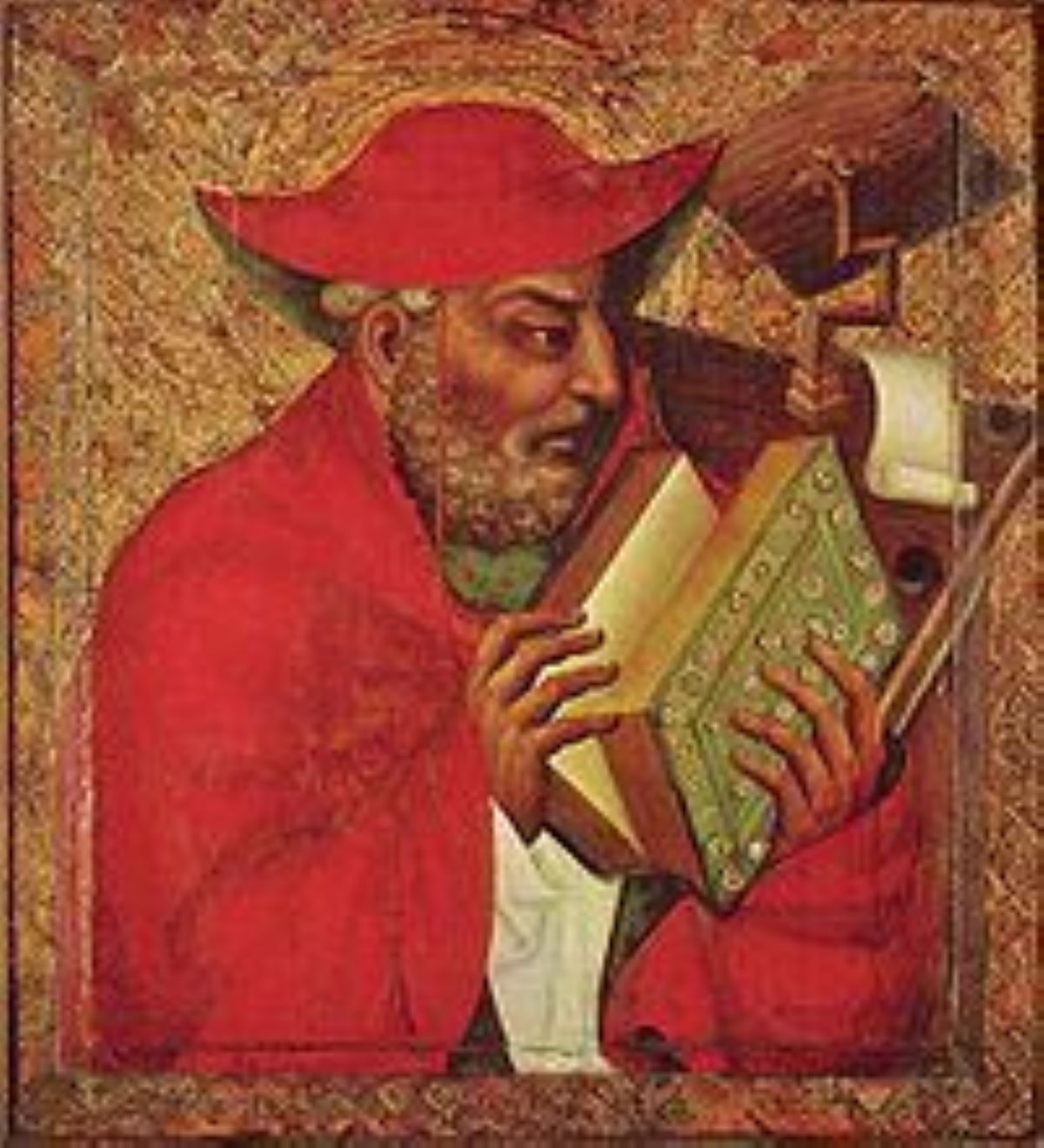
Historically, De Viris Illustribus referred to biographical collections devoted to influential figures of Greco-Roman or Christian culture: Suetonius, Saint Jerome, Petrarch. These works were catalogues of role models intended to train the elites. But history has changed. The global society has broadened the circle of the “illustrious.” Men are no longer alone. Continents no longer tell the same stories. Heroism is no longer measured by conquest, but by the ability to preserve, protect, and unite.
Revisiting this expression today means accepting that greatness can emerge from anywhere: forgotten villages, Indigenous communities, youth movements, silent resistances.
Africa: The Honor of Reconciliation
Africa has given the world some of its most powerful symbols of peace. Nelson Mandela remains, of course, the icon of reconciliation. His refusal of vengeance after 27 years in prison stands as an example of moral greatness. Beside him, Kenyan Nobel Peace Prize laureate Wangari Maathai showed that planting a tree could become a major political act. Her Green Belt Movement—linking ecology, women’s rights, and democracy—perfectly embodies the spirit of “Yes to Peace.”
More quietly, Malian writer Amadou Hampâté Bâ championed peace grounded in education, memory, and transmission. His words still resonate today as an antidote to a fractured world.
Asia: The Cradle of Nonviolent Philosophies
If nonviolence has a cradle, it lies in Asia. Mahatma Gandhi remains its unquestioned pillar. His struggle against colonial domination—without weapons, without hatred—has inspired generations. More recently, Malala Yousafzai reminded the world that peace also passes through education: a notebook, a pen, a right for girls.
Others, such as the Dalai Lama or Vietnamese monk Thich Nhat Hanh, have carried a vision of inner and political peace, reminding us that global conflicts often take root in tensions within the conscience.
The Americas: When Peace Becomes Civic Struggle
The Americas have amplified some of the greatest voices of peaceful resistance. Martin Luther King Jr. remains the universal figure of nonviolent struggle against racism. His marches, his speeches, his dream remain moral landmarks.
In the Andes, Rigoberta Menchú, Indigenous activist and Nobel Peace Prize laureate, reminds us that peace cannot exist without justice for Indigenous peoples. And in broader political history, Simón Bolívar, despite a nuanced legacy, embodies a continental aspiration toward sovereignty and unity.
Europe: Memory, Justice, and Humanism
Europe—scarred by two world wars—has learned that peace is never guaranteed. Bertha von Suttner, the first woman to receive the Nobel Peace Prize, was already calling in 1889 to “lay down your arms.”
Simone Veil, survivor of the concentration camps, transformed her suffering into a lifelong struggle for dignity and human rights. As for Vaclav Havel, he showed that literature, too, could topple regimes and open pathways to freedom.
Oceania: Preserving Identity, Protecting Peace
In Oceanian societies, peace is expressed at the heart of traditional cultures. Maori leader Te Puea Hērangi fought for the dignity of her people in the face of political pressures. Australian Aboriginal artist Albert Namatjira, blending Indigenous traditions with European techniques, made cultural dialogue a tool of peaceful resistance.
Toward a Global Pantheon of Peace
One of the current priorities of the FSDS Global Peace Network is precisely to document, uplift, and connect these voices that say no to war. A new pantheon—no longer reserved for the heroes of empires but open to all who carry peace on their shoulders—has become essential.
In this spirit, De Viris Illustribus could become De Viris et Mulieribus Illustribus: a symbolic space where men and women, from North and South, famous or unknown, meet on the same horizon—one of active, concrete, and lasting peace.
Conclusion: Saying No to War Means Expanding Memory
Rewriting De Viris Illustribus in the 21st century means recognizing that history is no longer made only in capitals, but in schools, villages, associations, boarding schools, and citizen movements. And that it is made, above all, together.
At a time when peace is threatened by weapons but also by indifference, it is our responsibility to listen to and transmit these voices. This is also the mission of Panorama and the FSDS Global Peace Network: to carry high the universal cry “No to war, Yes to peace,” and to remind the world that the truly illustrious are those who make it more humane.
Peace be with you, and with your spirit.