Rene Anthere Rwanyange
EcoLinks, a South Korean company, has presented the findings of Phase 1 of its Climate-Resilient Clean Water Project in Rwanda, an innovative initiative aimed at expanding access to affordable, safe, and climate-resilient drinking water in rural communities while generating carbon credits through renewable energy.
Endorsed by Rwanda’s business, water, sanitation, and environmental regulators, the project aims to strengthen Rwanda’s role in the carbon credit market and reduce the cost of water by constructing 150 solar-powered boreholes in rural communities. It is projected to benefit over 200,000 people, significantly reducing waterborne diseases and potentially cutting related mortality by up to 80% in target areas. The project also aims to halve the daily time households spend fetching water, a change that is expected to benefit women and children, especially.
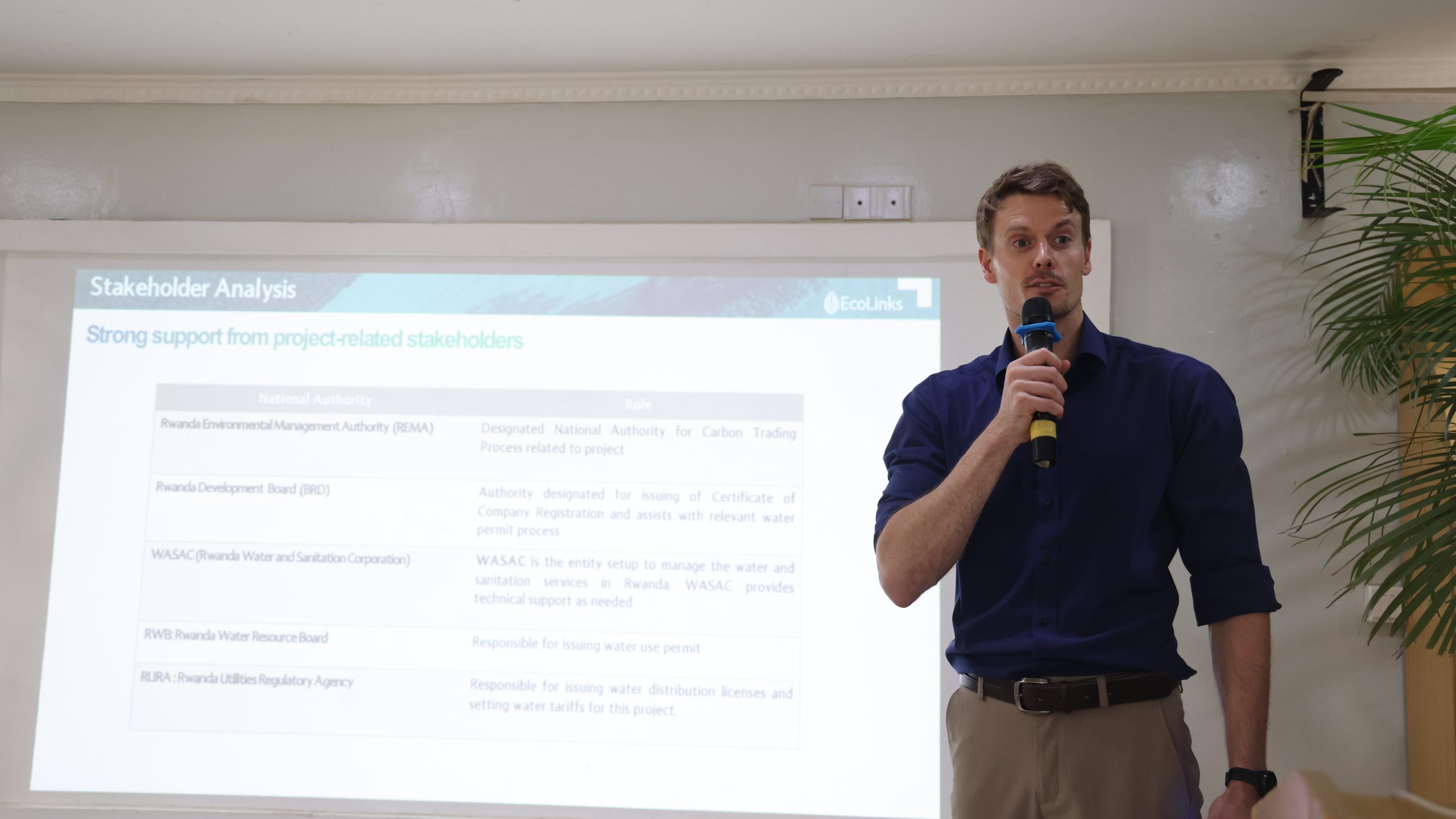
“The aim of the project is to produce water and sell it at a lower price than the current one, so that people can afford it. We are collaborating with local partners and the Government of Rwanda to achieve this,” says Stanley Phillipson, the Climate Project Developer at EcoLinks.
Through its carbon credit component, EcoLinks becomes one of Rwanda’s first contributors to international carbon markets under Article 6 of the Paris Agreement. By replacing diesel-powered systems with solar-powered alternatives, the project will reduce greenhouse gas emissions and generate certified emission reductions (CERs), supporting further expansion. Over a 10-year period, it is expected to avoid approximately 480,000 tons of CO₂ equivalent emissions through the installation of around 150 solar-powered water systems nationwide.
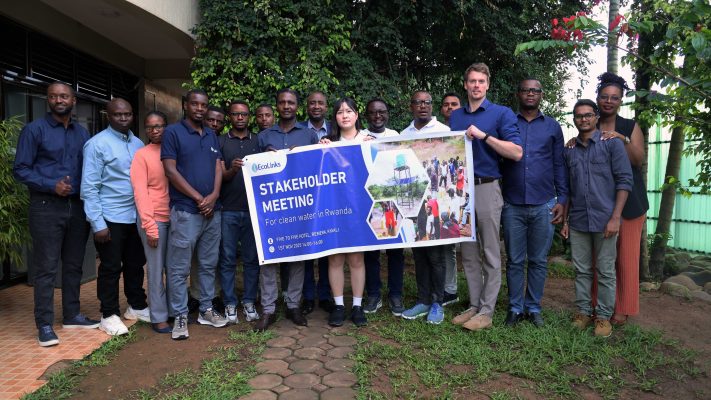
The presentation of the study’s findings in Kigali marked the completion of the project’s feasibility stage and the transition into Phase 2: infrastructure construction and implementation, advancing Rwanda’s climate-resilient development agenda.
Conducted in partnership with ECORDECO Ltd, a Rwandan consulting firm, the study covered the districts of Burera, Bugesera, Kayonza, Ruhango, and Rwamagana. It assessed financial feasibility, technical design, and water quality as the foundation for the national rollout of solar-powered water systems.
The financial assessment analyzed household affordability, tariff models, and long-term sustainability, confirming the economic viability of decentralized, prepaid water supply systems. The technical design, developed jointly with GAI Ltd, focused on groundwater mapping through geophysical and topographic surveys, solar potential evaluation, and system design suited to remote rural areas.
Reliable groundwater sources have been identified in the districts of Kayonza, Burera, Rwamagana, Ruhango, and Bugesera. The infrastructure development pilot phase is being implemented in Kayonza and Ruhango, where, in each district, a 4.8-kilowatt solar-powered pump, a 10-cubic-meter elevated storage tank, and a network of prepaid smart taps, a SUNDA pay-as-you-fetch system developed by Sunda Technology Global, represented by AKAGERASAN Ltd, a Rwandan company, are being introduced. In the pilot phase, the project will provide clean water to about 8,000 people for up to 25 years.
EcoLinks reaffirmed that the initiative aligns with Rwanda’s Vision 2050, national strategies for renewable energy, climate adaptation, and universal access to safe water. With Phase 1 now concluded, the company will focus on regulatory licensing and investor engagement throughout 2026.
Recognizing that water boiling is prevalent in rural Rwanda and becomes costly due to fuel, time, indoor air pollution, deforestation, and carbon impacts, the initiative aims to reduce household water costs by transitioning from boiling to safer, lower-cost alternatives, specifically solar-powered boreholes.
Once fully implemented, the project will enhance climate resilience, reduce disease burdens, and improve rural livelihoods, delivering clean water powered by the sun and positioning Rwanda as a regional model for low-carbon, sustainable water infrastructure.