Panorama Business
BRD reopens second sustainability-Linked Bond in Rwandan Francs and attracts international investor through first-of-its-kind hedging solution.
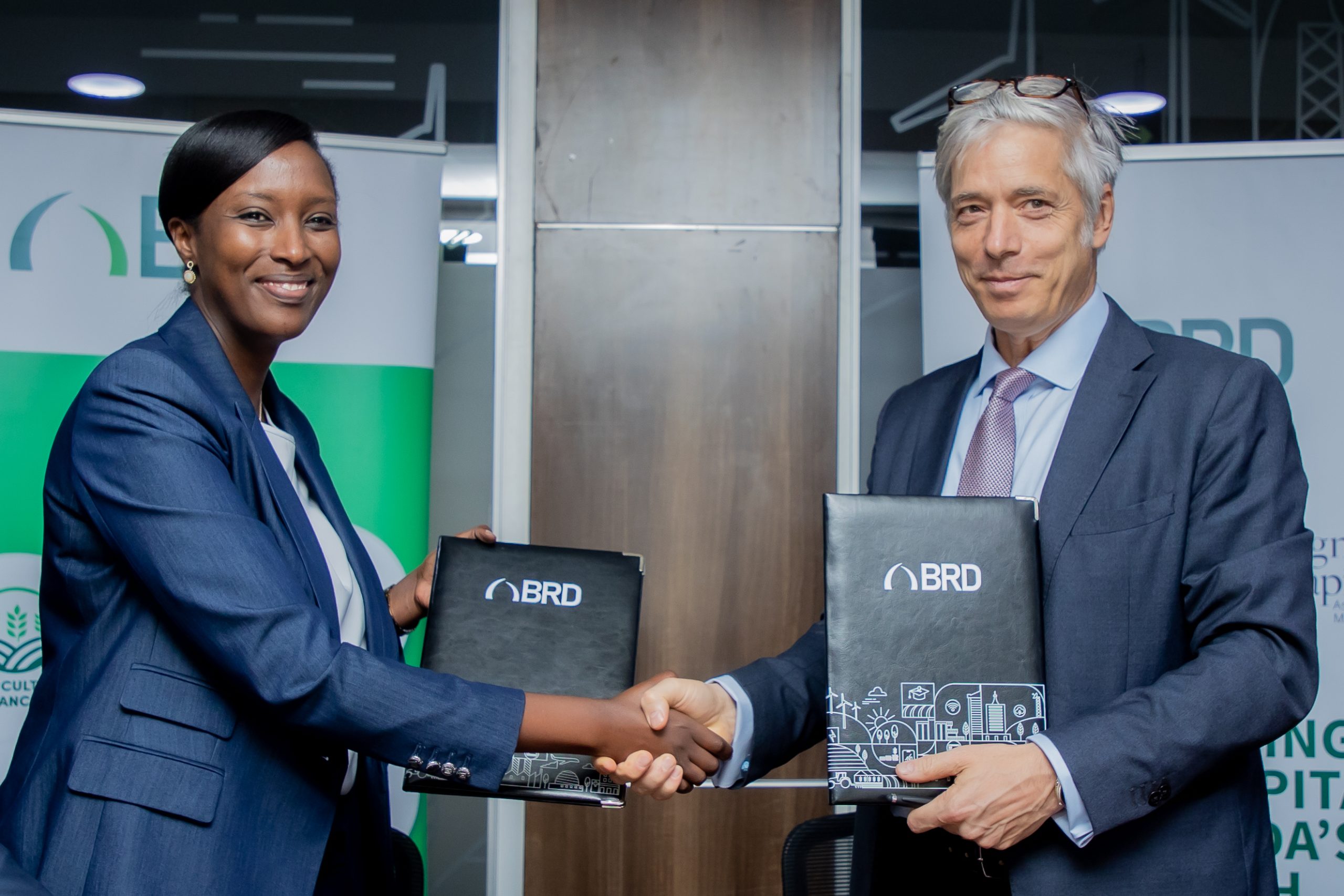
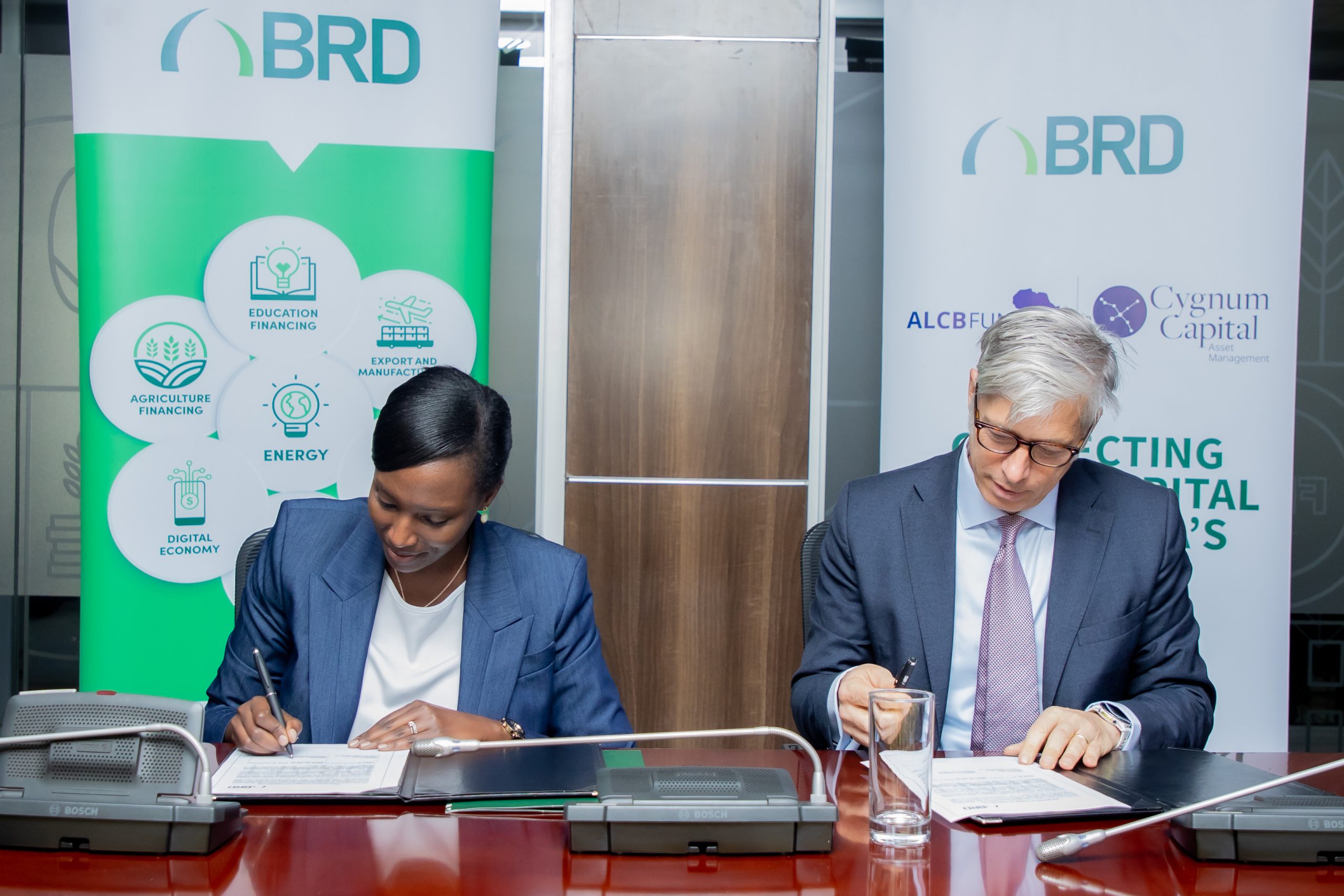
On May 15, 2026 the Development Bank of Rwanda (BRD) has signed an investment agreement with the African Local Currency Bond Fund (ALCB Fund), a fund managed by Cygnum Capital, and reopened its second Sustainability-Linked Bond (SLB) issuance in Rwandan francs (RWF) for an amount equivalent to USD 11 million.
The reopening marks a milestone for Rwanda’s capital markets by bringing an international investor into a local-currency SLB, widening BRD’s investor base beyond domestic markets.
The international participation was made possible through a hedging solution arranged by TCX (The Currency Exchange Fund) with subsidy support from the European Commission’s EFSD+ Pricing Facility and SDG7 Program funded by Germany’s Federal Ministry for Economic Affairs and Climate Action (BMWK).
The transaction builds on BRD’s Sustainability-Linked Bond programme and supports its strategy to mobilize long-term financing in local currency while linking funding to measurable sustainability outcomes. It reflects growing confidence in Rwanda’s development finance agenda and BRD’s role in structuring market-based solutions that crowd in private capital for priority sectors.
“We are pleased to have participated in this innovative transaction with BRD. This thematic bond marks the ALCB Fund’s first investment in Rwanda, a country that remains of great interest to the Fund.
The success of this transaction reaffirms our view that Rwanda’s potential and prospects are attractive and that development banks of BRD’s stature play a crucial role in supporting broad-based inclusive economic growth,” said Mr. Clemens Calice, CEO of Cygnum Capital at the signing ceremony.
“This transaction is a milestone for BRD and for Rwanda’s capital markets. By mobilizing international capital in Rwandan francs, made possible through TCX’s subsidized hedging solution, implemented for the first time in Rwanda, we have demonstrated that local‑currency issuers can access a wider pool of global investors when the right risk‑mitigation tools are in place.
Expanding long‑term financing in RWF reduces currency risk while scaling lending to priority sectors that generate jobs, promote exports and manufacturing, support affordable housing, and empower women‑led enterprises. The reopening of our second Sustainability‑Linked Bond reflects market confidence and our continued commitment to measurable development impact,” said Ms. Stella Rusine Nteziryayo, CEO of BRD.
Ms. Nteziryayo further noted that the transaction is fully aligned with BRD’s mandate to mobilize private capital in support of Rwanda’s Vision 2050 and National Strategy for Transformation (NST2). By linking financing costs to ESG performance and enabling international participation in local currency, the structure helps deepen the domestic debt market and offers a replicable pathway for future Rwanda‑franc issuances.
BRD and Cygnum Capital reaffirmed their commitment to strengthening cooperation and exploring additional opportunities to scale sustainable local currency financing solutions in Rwanda.
Established in 1967, the Development Bank of Rwanda (BRD) is the country’s sole national development bank. BRD supports sustainable development by offering affordable, long-term, and tailored finance. Over the past decades, BRD has financed projects in key sectors including infrastructure, agriculture, affordable housing, education, green finance, exports, and manufacturing.
The African Local Currency Bond Fund was established by KfW in 2012, on behalf of the German Ministry for Economic Cooperation and Development (BMZ), with a dual mandate to support the development of domestic African capital markets, while also channeling private-sector investment to SDG-aligned transactions where the ultimate beneficiaries are low-income households and MSMEs.
The Currency Exchange (TCX) was founded in 2007 as a specialized fund that provides currency hedging instruments, such as swaps and forwards, to help international investors and development finance actors manage exchange-rate risk in frontier and emerging markets, thereby supporting long-term local currency financing. TCX manages BMWK SDG7 and EFSD+ programmes.