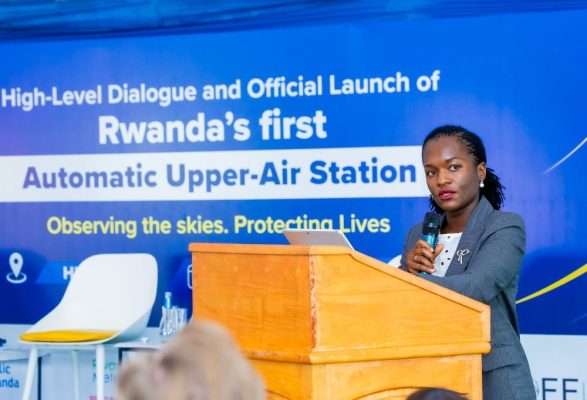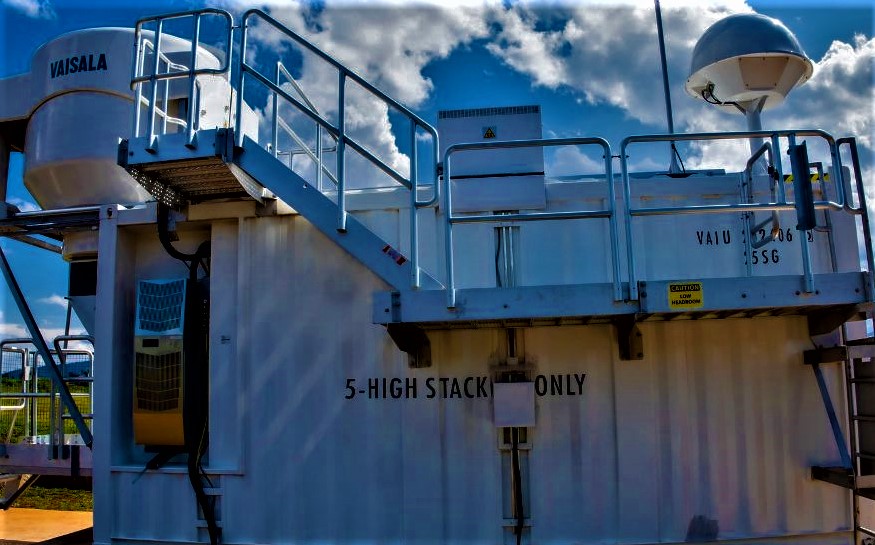
Rwanda has officially inaugurated a state of the art weather observation station designed to collect and analyze atmospheric data at high altitudes, a development expected to enhance the accuracy of weather forecasting and strengthen efforts to address the effects of climate change.
This station located in Ngoma Sector, Huye District, the facility was constructed at a cost of more than Rwf5 billion. It was established through a partnership between the Government of Rwanda and international partners under the Systematic Observations Financing Facility (SOFF), a global initiative aimed at improving weather and climate observation systems.
Dr. Védaste Iyakaremye, Director of Observation, Data Processing and Climate Information Management at Meteo Rwanda, said the new station has capabilities far beyond those of conventional weather stations currently operating in the country.
He stated: “This station is different from the others we previously had because those only reached an altitude of 10 meters, while this one can collect data up to 40 kilometers in altitude and within a radius of 500 kilometers from its location. This will allow it to serve not only Rwanda but also neighboring countries and the global meteorological community.”
According to Dr. Iyakaremye, the station is capable of collecting a wide range of atmospheric data, including temperature, humidity, wind speed and direction, as well as information that helps determine rainfall conditions within clouds.
Meteorological experts believe the data generated by the facility will improve the reliability of weather forecasts and support various sectors such as aviation, agriculture, disaster risk management, and scientific research.
The Minister of Environment, Dr. Bernadette Arakwiye, emphasized the importance of maintaining the facility to ensure it continues serving both Rwanda and the wider region.
She said: “This station is located on our territory, and therefore we have the responsibility to protect and maintain it while serving the neighboring region. We should not focus only on Rwanda; we must take care of it so that it can provide information that benefits people across the region.”
The facility becomes only the second Automatic Upper-Air Station of its kind in Africa, joining a similar installation in Morocco. It is expected to play a significant role in climate research, agricultural planning, weather forecasting, and disaster preparedness.
Data collected by the station is shared with neighboring countries and international meteorological networks, further strengthening Rwanda’s contribution to regional and global weather monitoring efforts.