Panorama
On the rolling hills of eastern Rwanda, women farmers are reshaping the future of agriculture, turning vulnerability into opportunity through climate-smart innovation.
For years, many relied on open-field farming, exposed to drought, pests, and erratic rainfall. Harvests were unpredictable, incomes unstable, and household food security often at risk.
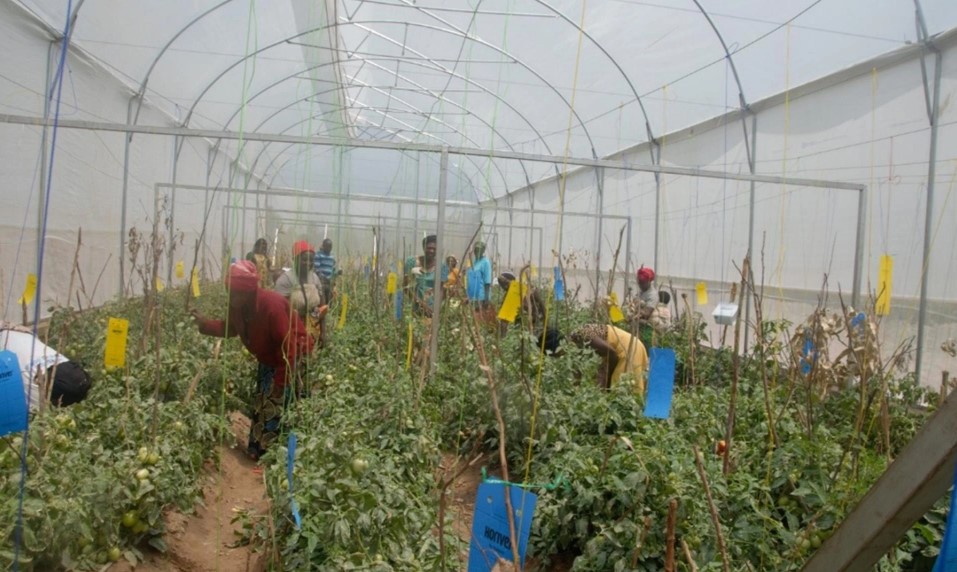
Today, that reality is steadily changing. Through greenhouse farming supported by the Joint Programme on Rural Women’s Economic Empowerment (JP RWEE), women in Kirehe District are transforming small plots into productive, year-round sources of food and income.
For Josiane Uwimana, a member of the Terimbere Muhinzi Cooperative, the shift has been life-changing.
“Before, I grew tomatoes in open fields and earned only 20,000Frw from six acres,” she says. “With my first greenhouse harvest, I earned 500,000Frw from a much smaller space. I never imagined this was possible.”
Greenhouses provide protection from pests, enable efficient water use through controlled irrigation, and create stable growing conditions. As a result, farmers can now produce tomatoes, peppers, cucumbers, and leafy vegetables even during prolonged dry spells or irregular rainy seasons.
Uwimana believes the potential is far from exhausted. “If we had more greenhouses,” she says, “we wouldn’t have to wait for a whole season. We could harvest continuously and start the next cycle immediately.”
Beyond farming
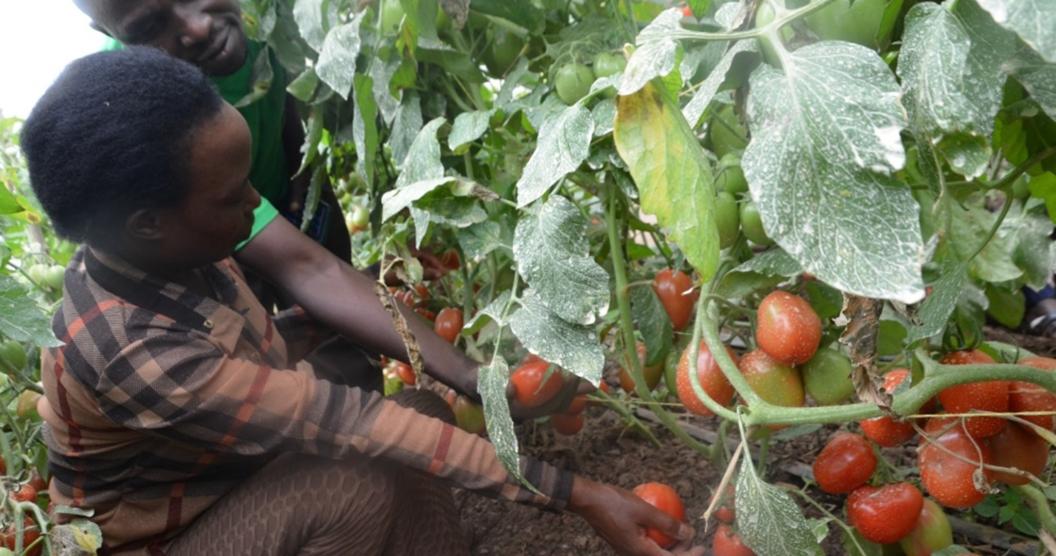
The initiative goes beyond infrastructure. Through hands-on training, JP RWEE equips women with practical skills in greenhouse management, irrigation techniques, pest control, soil fertility, and collective marketing.
“We train women to understand every step, from soil preparation to market sales,” says Jean Marie Vianney Dusengimana Ndabashimiye, a field officer with INADES Formation Rwanda. “This strengthens their leadership and decision-making, both in farming and business.”
As a result, women are stepping into broader roles as entrepreneurs, trainers, and cooperative leaders. Some groups have introduced crop rotation within greenhouses—switching between tomatoes, peppers, and cucumbers—to maintain soil health, reduce pests, and ensure continuous production.
Improving lives and nutrition
The benefits extend well beyond higher yields. Families now have year-round access to fresh vegetables, improving nutrition for children and adults alike. More stable incomes are enabling women to save, plan ahead, and better withstand economic shocks.
“Greenhouses have freed us from the uncertainty of weather,” says one cooperative member. “We can plan our work, feed our families, and make informed decisions about our farms and finances.”
A pathway to resilience
The experience in Kirehe highlights the broader impact of investing in women farmers. With access to climate-smart technologies, knowledge, and sustained support, they are not only increasing production but also strengthening household resilience and contributing to local economic growth.
In Rwanda, greenhouse farming is emerging as a practical pathway toward food security, climate resilience, and inclusive development.
For Uwimana and many others, the transformation is as personal as it is economic. “We are no longer just surviving,” she says. “We are leading, innovating, and shaping the future of our communities.”